The Park
Hyatt Tokyo is an iconic hotel that is not unlike a spaceship. Set in the 14
upper floors of Kenzo Tange’s Shinjuku Park Tower, with the city spread out
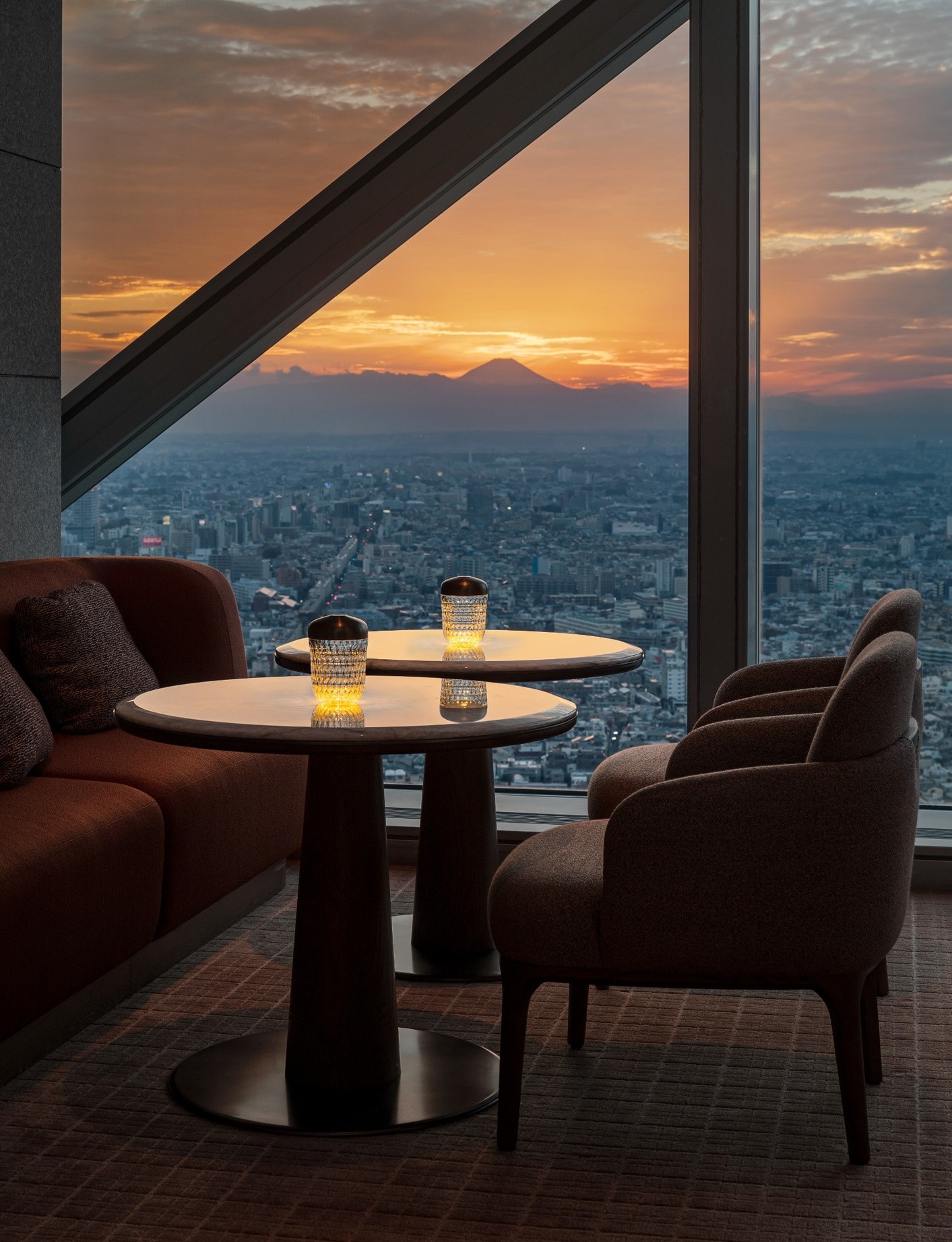
below and Mount Fuji visible like a snow-capped planet, it is beloved for its
cool elegance. When the hotel opened in 1994, its luminous modernist interiors,
by the New Zealand-born designer John Morford, seemed to exist beyond time and
place, the nest of the international business traveler aloft in a stratosphere
of power.
Almost a
decade later, Sofia Coppola turned that otherworldly quality into a meditation
on solitude when she used the Park Hyatt Tokyo as the setting for “Lost in
Translation.”
A design must
be powerful to inspire diverging interpretations and passionate supporters.
Both outward facing and inward gazing, the hotel has a paradoxical nature that
demanded a sensitive touch when it came time to bring it up to date.
How does one
modernize a building that was built to represent modernity? How does one
respect a period heritage without indulging in nostalgia? How does one serve
the contemporary needs of travelers without disrupting their pristine
decades-old image of a masterpiece?

Hospitality
Park Hyatt Tokyo
Tokyo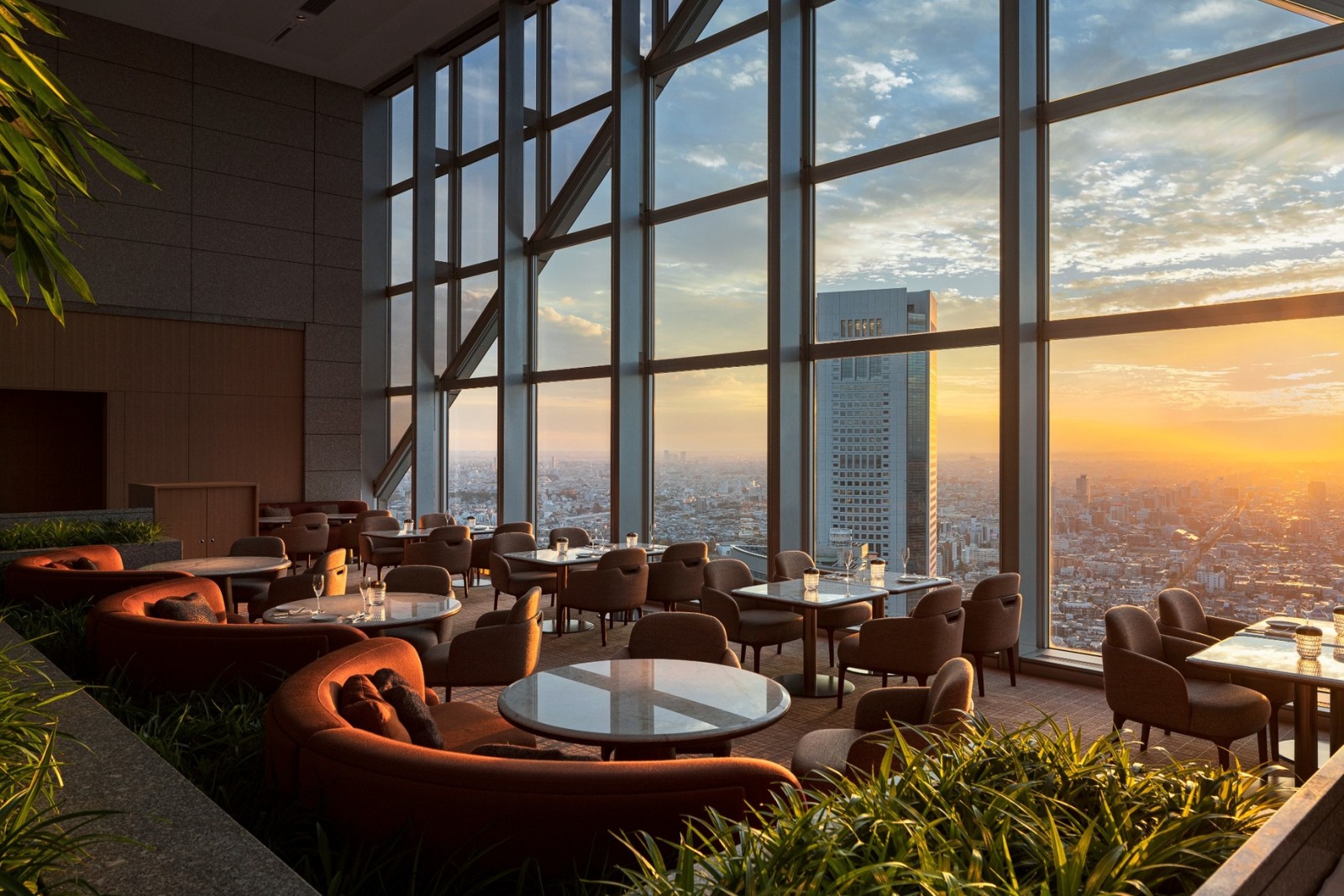
There are places that do not ask you to transform them, but to listen.
The Park Hyatt Tokyo is one of those places.
A hotel suspended in the sky, formed by Kenzo Tange, inhabited by the quiet restraint imagined by John Morford, and marked forever by the luminous melancholy of Lost in Translation.
A place where the city is as much sensed as it is seen.
Where each step invites not only forward movement, but a turn inward.
When we were given the commission, the question was never what shall we change, but rather how has time itself already changed this place, and what can we reveal of that silent maturation.
It was not about adding novelty.
It was about discerning what needed to remain untouched, what called for transformation, and what simply hoped to be carried forward with greater gentleness.
The Park Hyatt Tokyo is not only architecture.
It is an atmosphere.
A particular way of being in the world.
A verticality that soothes.
A light that absorbs.
A silence that holds.
We sought to prolong that presence, to make it more human, more tactile, to free the hotel from what felt too austere without ever weakening its inner strength.
To understand this transformation, one must follow a visitor, perhaps the one from the film, perhaps another, arriving for the first time or returning after twenty years, and sensing in every space a different vibration, as if the hotel itself had learned to breathe in a new way.
Patrick Jouin & Sanjit Manku
THE LOBBY
The taxi stops beneath the canopy drawn by Tange.
The city pulses behind it.
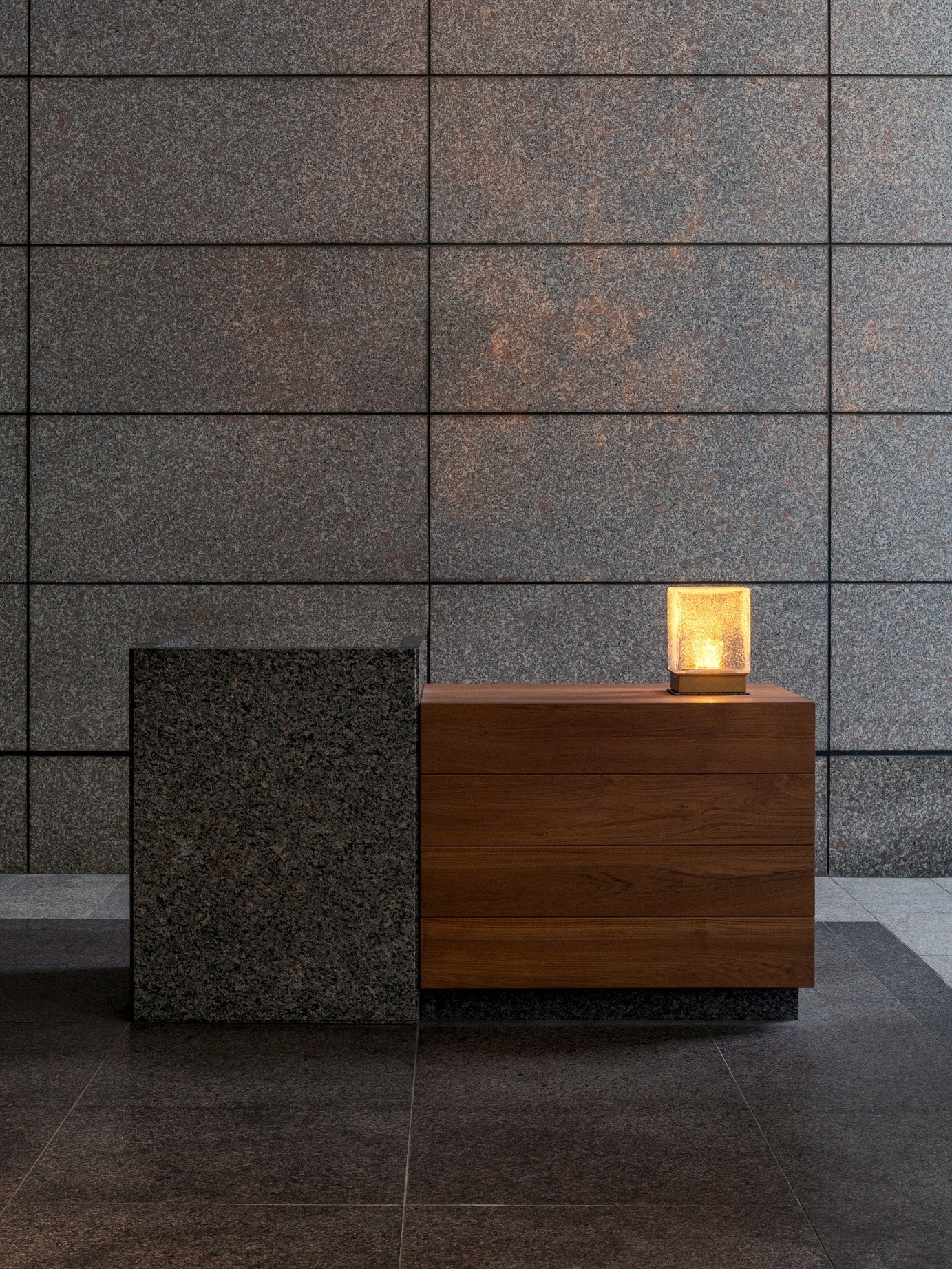
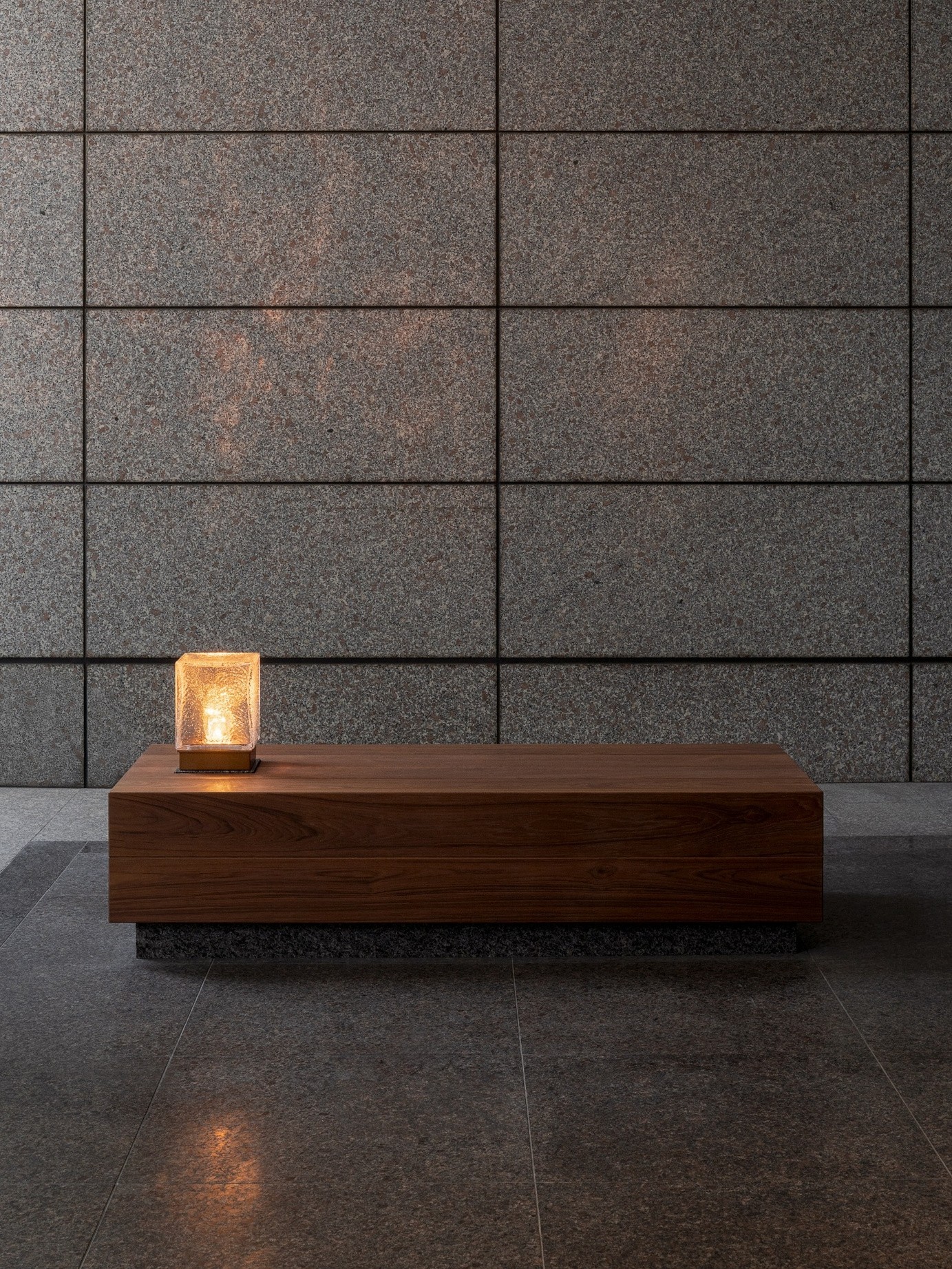
In front, dark stone, aluminum, carefully laid granite, a world that feels rigorous and almost entirely vertical.
Then, an unexpected softness.
A simple wooden bench, warm to the touch.
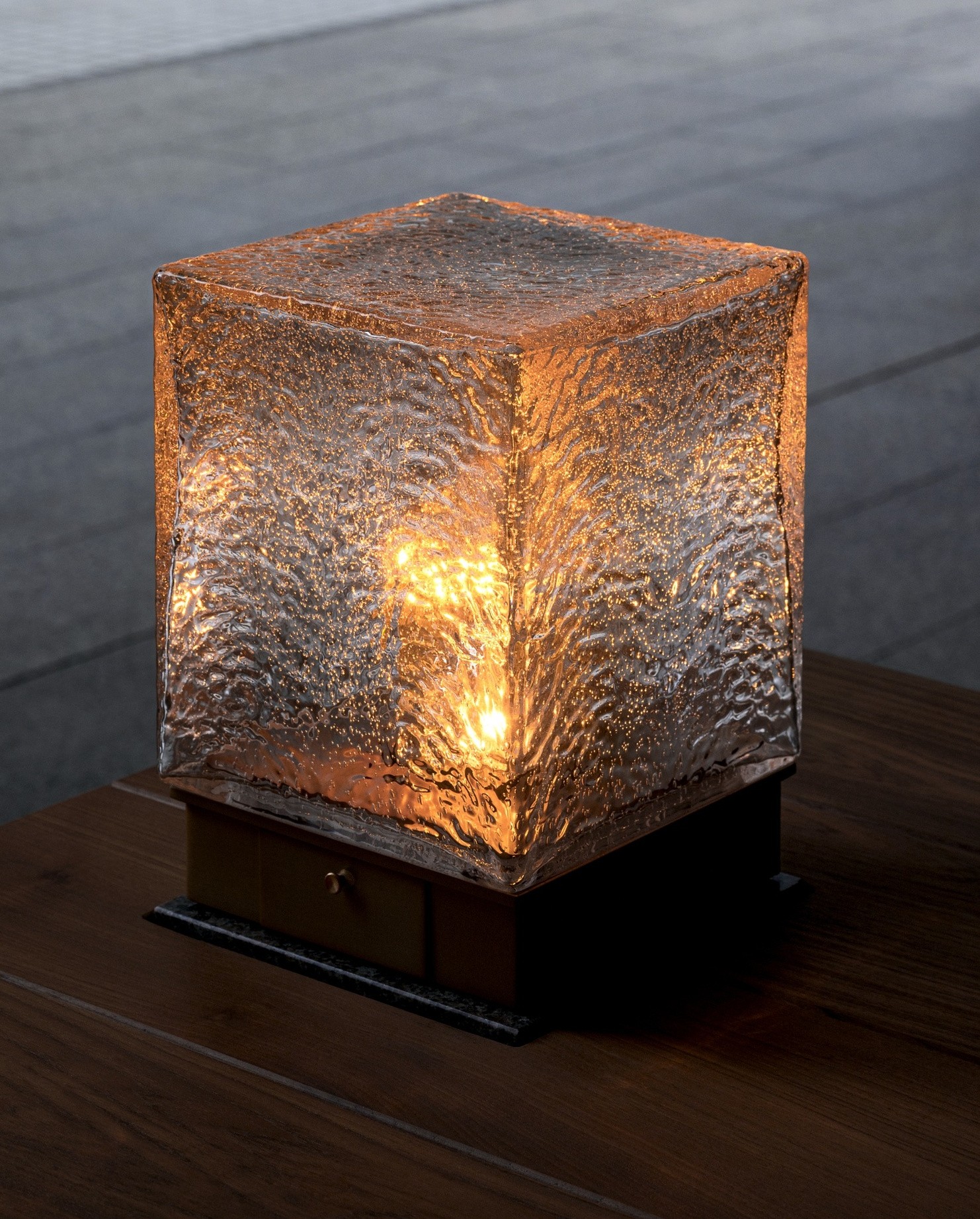
Above it, a cast glass luminaire, with a dense, nearly burnt materiality, its striations holding the memory of a vanished tree.
The visitor does not yet know that this is the first breath of our intervention.
A murmur.
A quiet signal.
A way of saying
the place will remain the same,
but it will welcome you differently.”
Entering the building reveals a place that feels both familiar and newly awakened. The doors slide open and the lobby appears like a memory returning, a space one recognizes even before ever having stood inside it.
Almost nothing has been altered, yet that almost nothing has redefined everything.
The carpets have been tuned to gentler tones, the light refined and sculpted so that it reveals rather than illuminates, the woods reworked without erasing a single line of the original design. The sensation is not one of novelty but of a place that has shed what weighed upon it and found its breath again, a continuity so subtle that one cannot quite tell whether the space has been restored or has simply aged with grace.
The elevator is a vertical cocoon, a quiet chamber that prepares the eye for what lies above. The three small sculptures that have always accompanied the ascent still hold the memory of the hotel. As one rises, the light intensifies with a delicate progression, as though the visitor were being gently prepared for the clarity that awaits at the summit. There is something almost ritual in this moment, a passage between the world below and the height where silence and sky meet.
PEAK LOUNGE
Then the doors open.
And the visitor enters a nave.
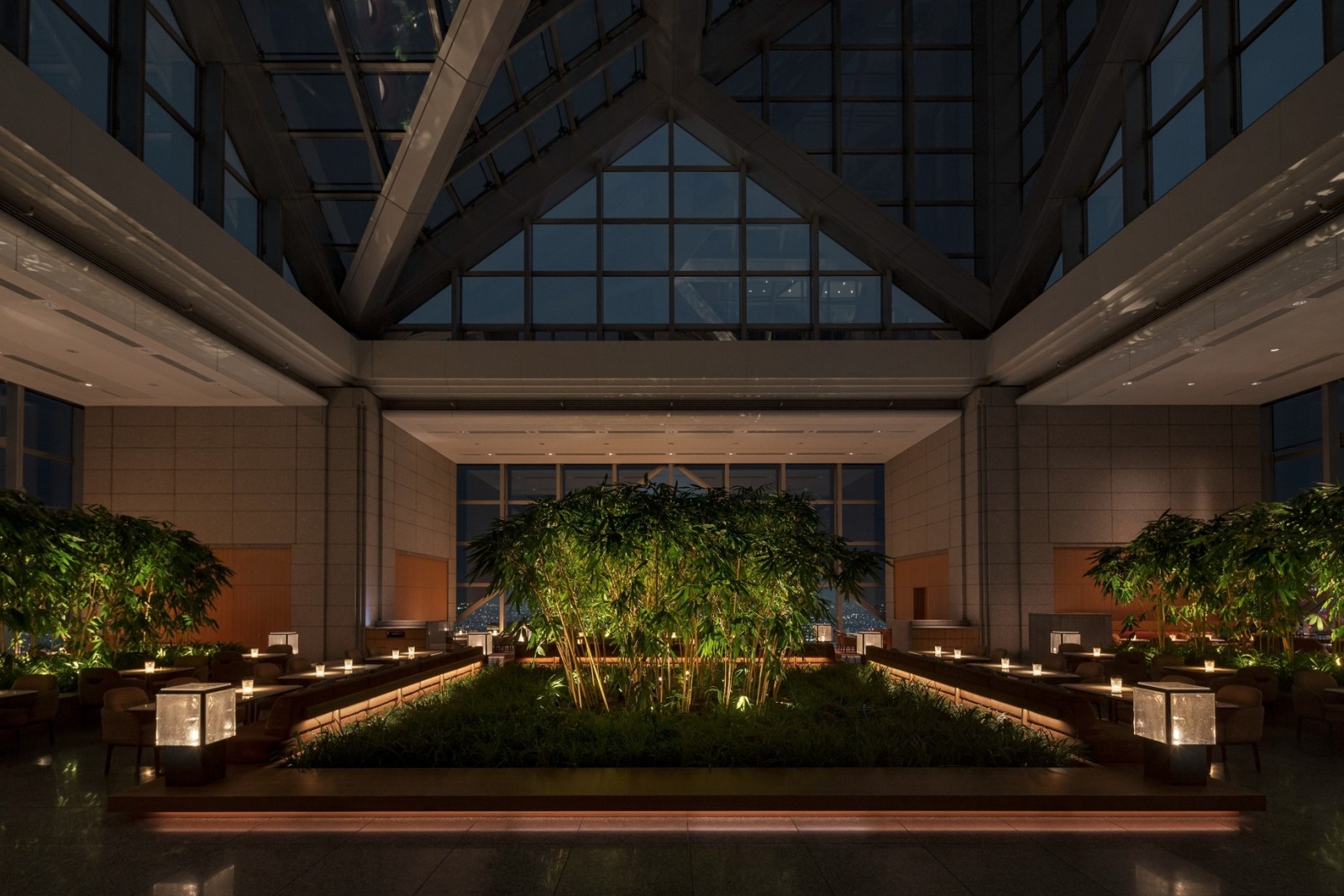
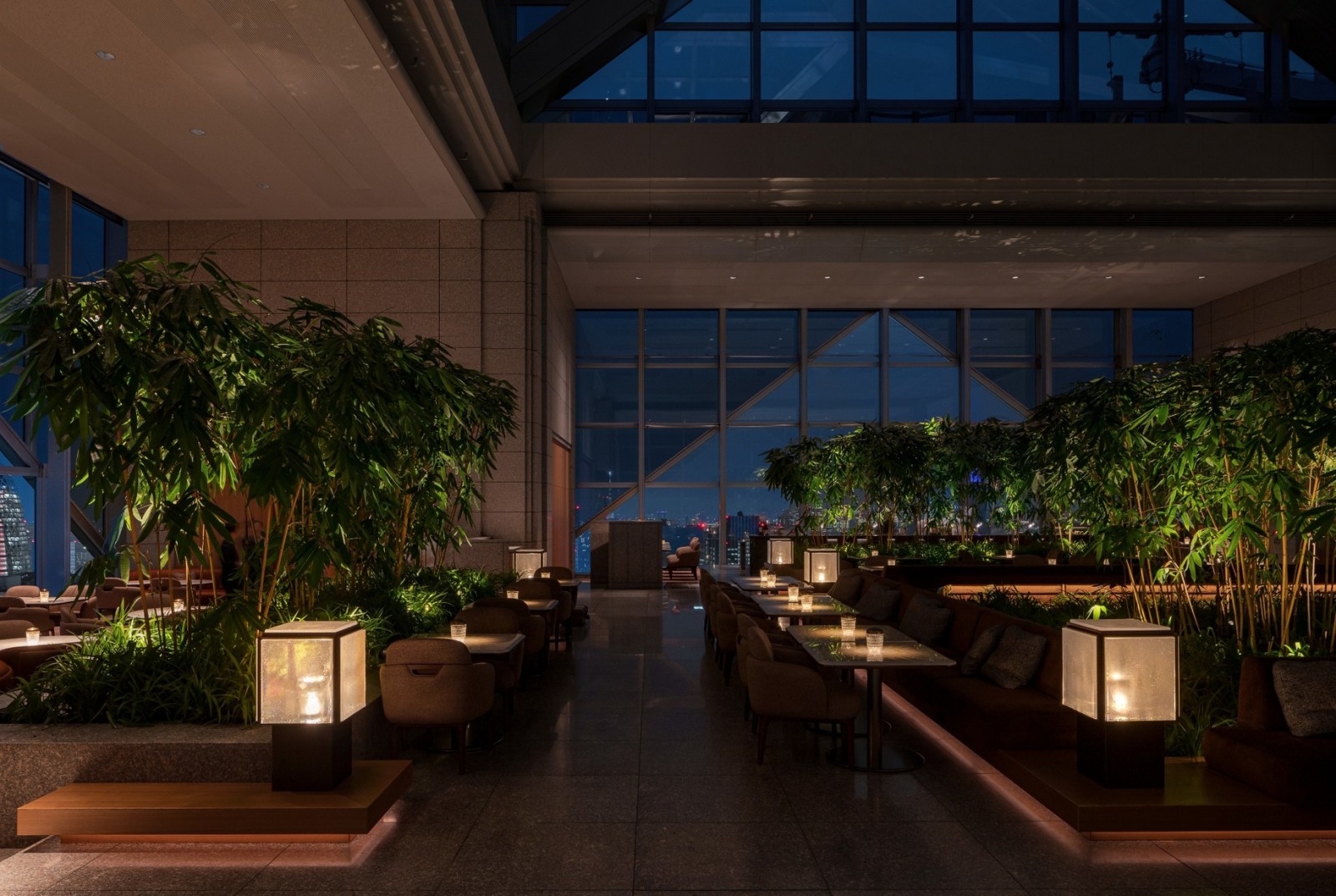
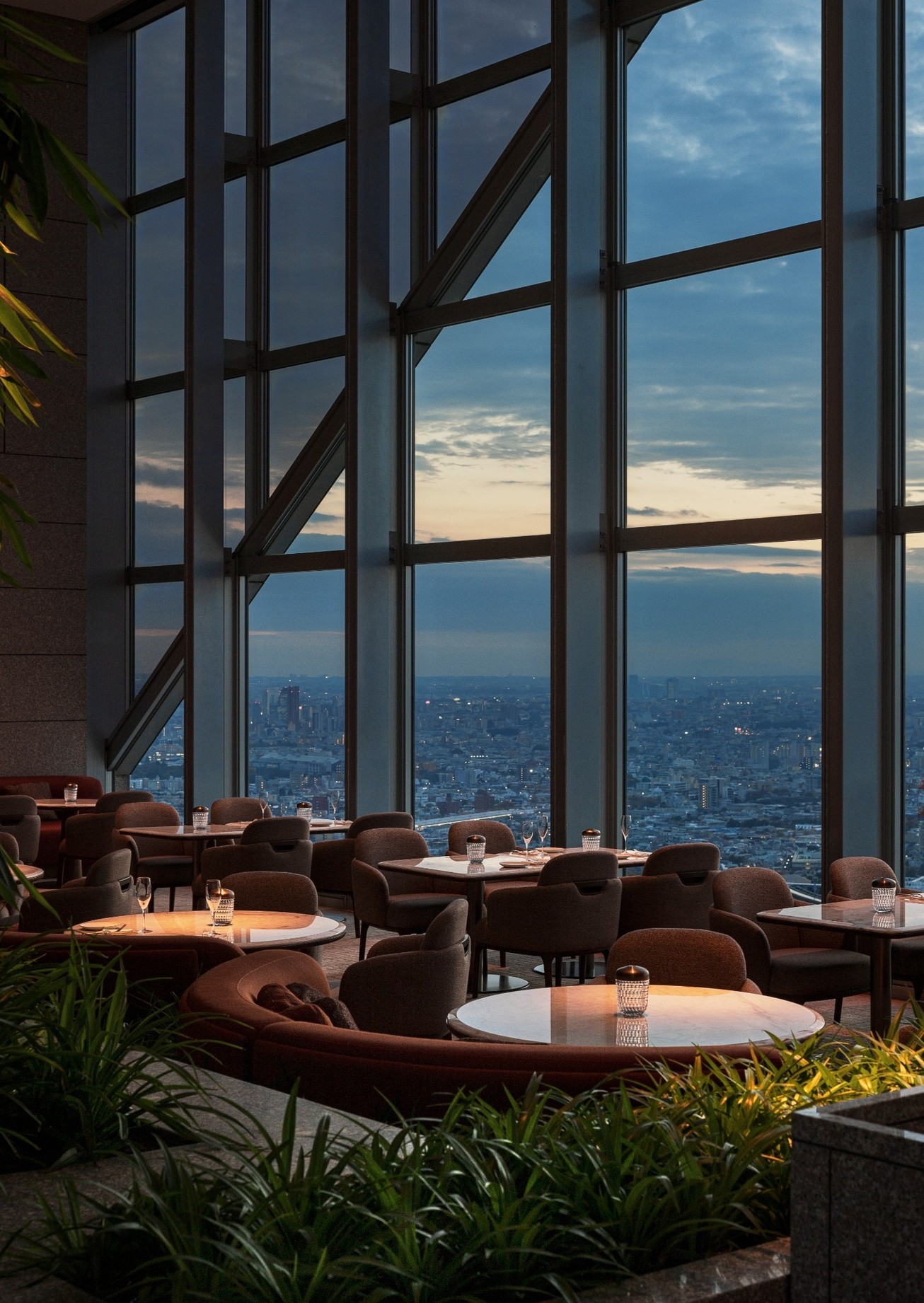
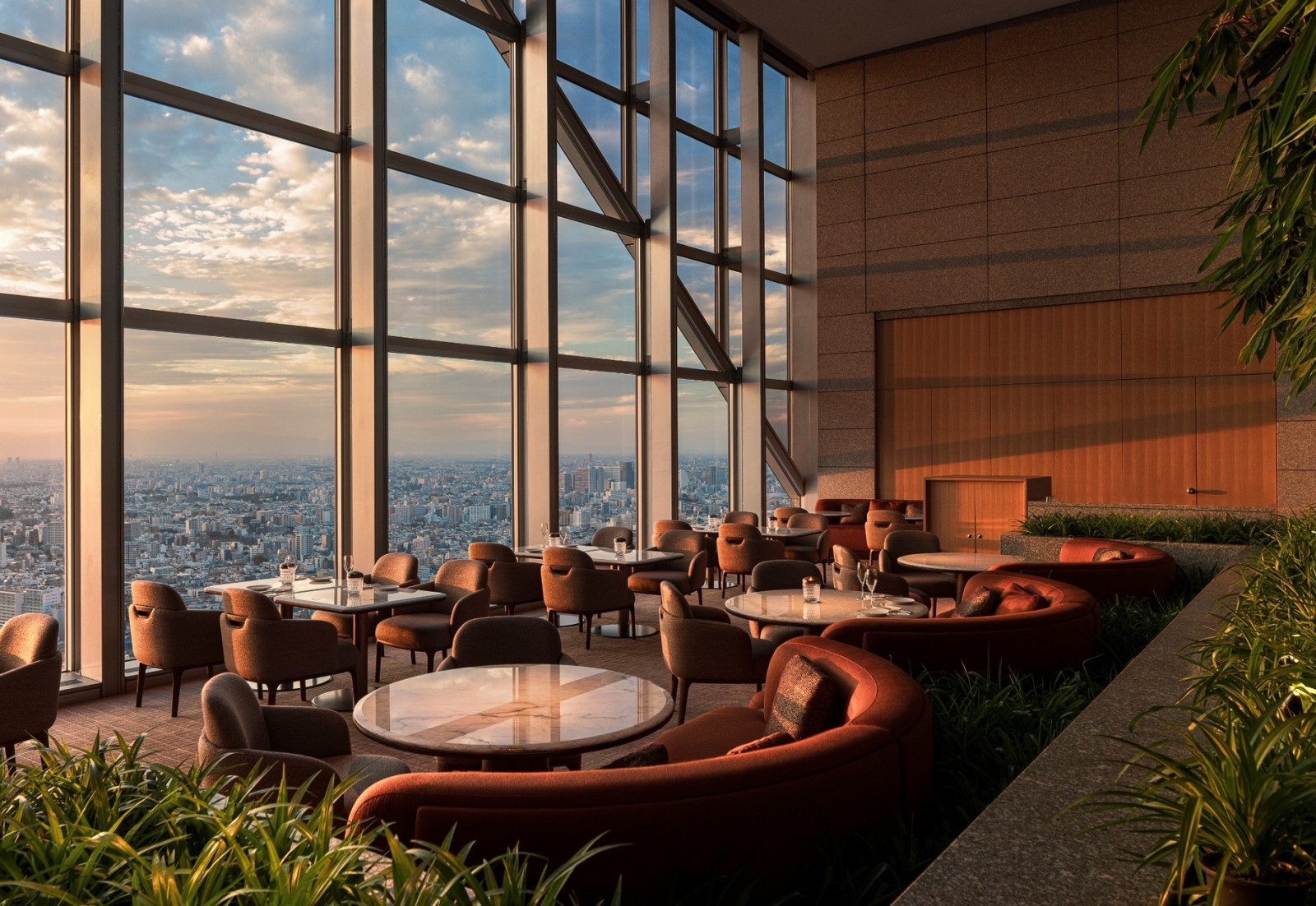
A place that Tange imagined as a heart in the sky, a garden suspended beneath twenty two meters of glass, where a forest of bamboo speaks with the light.
This place, unchanged for thirty years, had become almost mythical. Yet it had grown still, as though the air had stopped moving.
We sought gestures so subtle they would simply set its breath free.
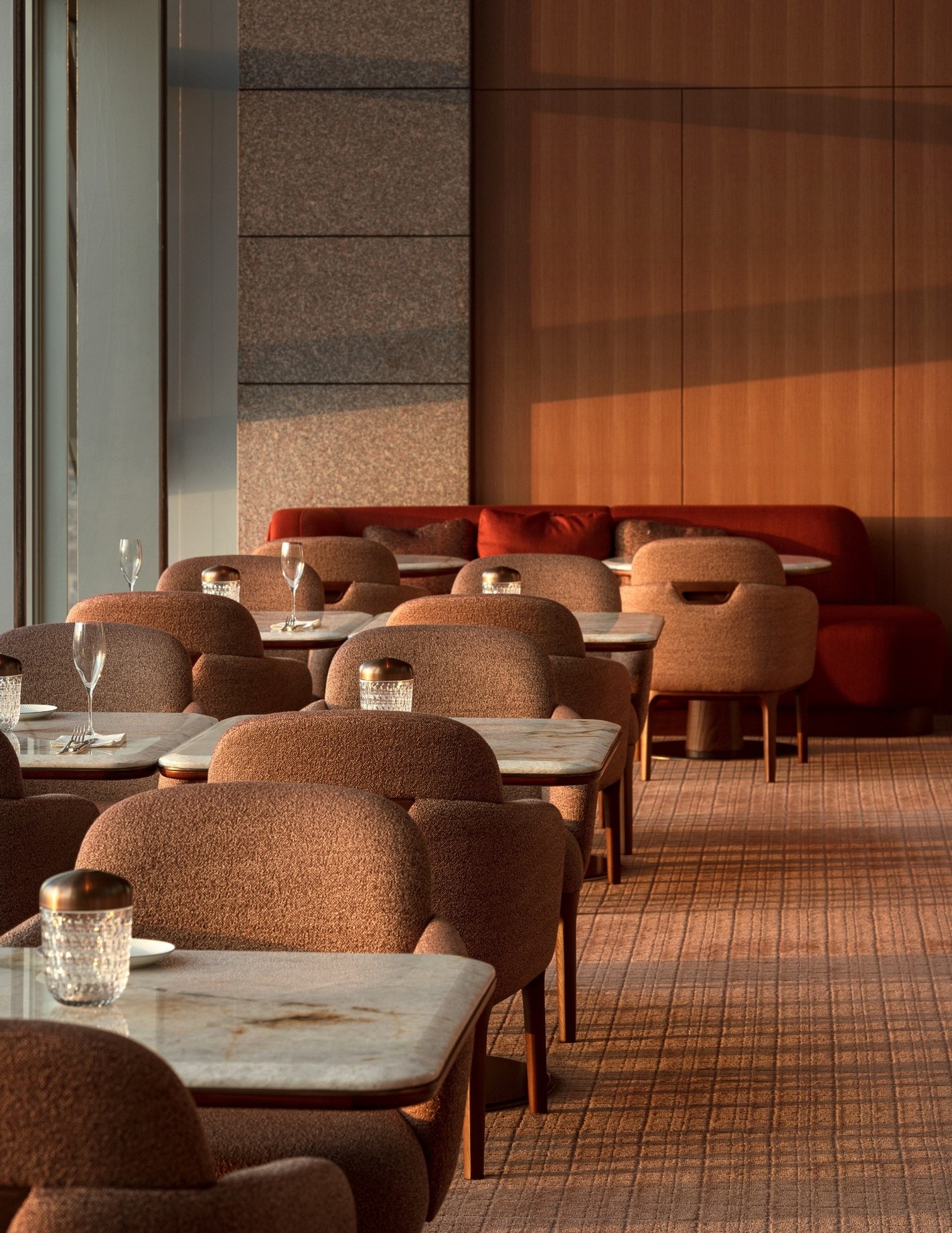
Soft curved banquettes in warm ochre tones.
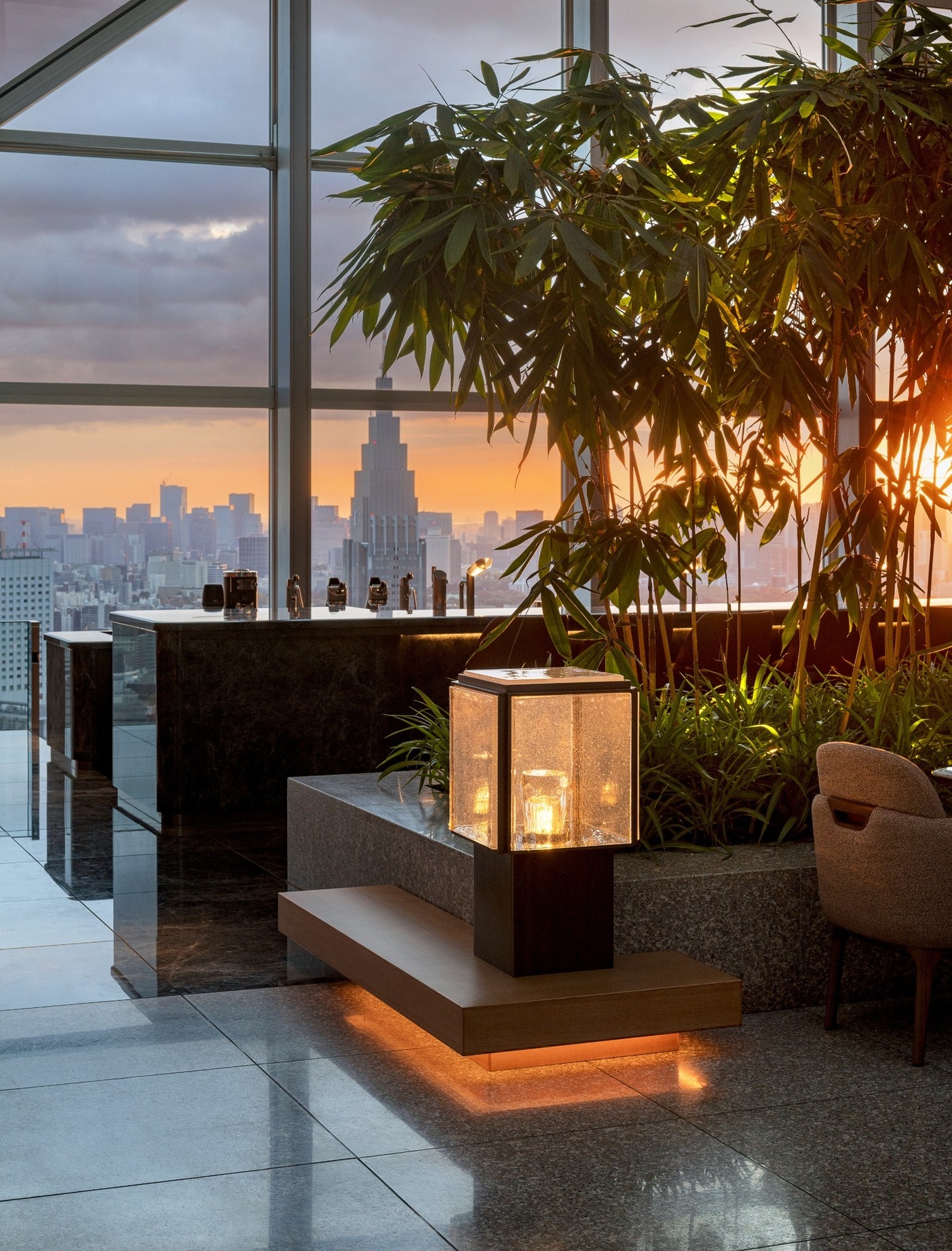
A long bar carved from a single block of Chelsea Grey marble, resting like a gentle cliff.
Eight glass and metal lanterns, austere and almost monastic, echoing the architecture without ever contradicting it.
Here, light does not direct. It enfolds.
It allows the day to become contemplation and the night to become mystery.
This is the space where Lost in Translation etched the luminous melancholy of the hotel into collective memory.
The visitor still feels that suspended emotion, yet it is now softened, warmed, as if the hotel had decided that solitude can be beautiful without being cold.
GIRANDOLE BY ALAIN DUCASSE
Girandole
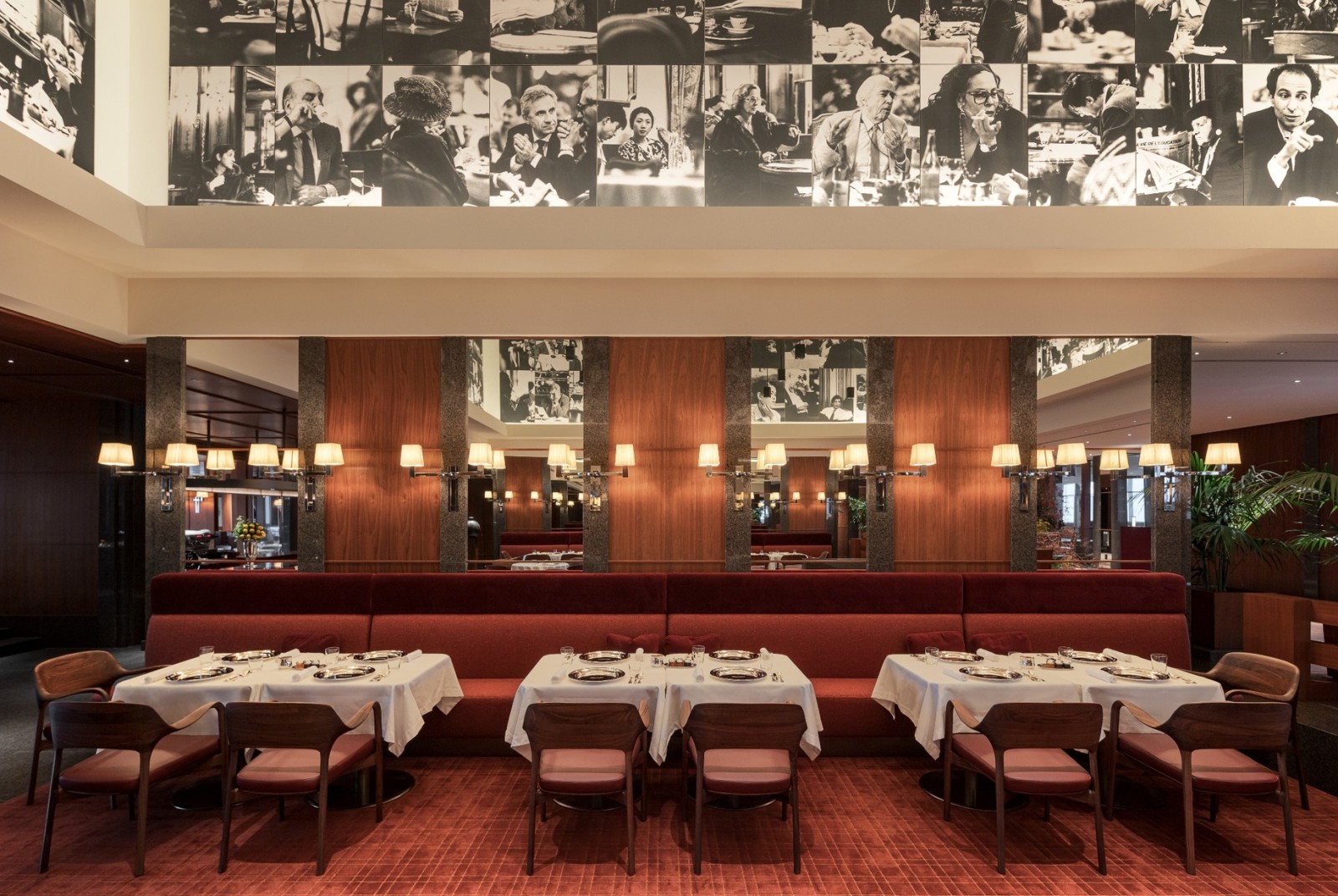
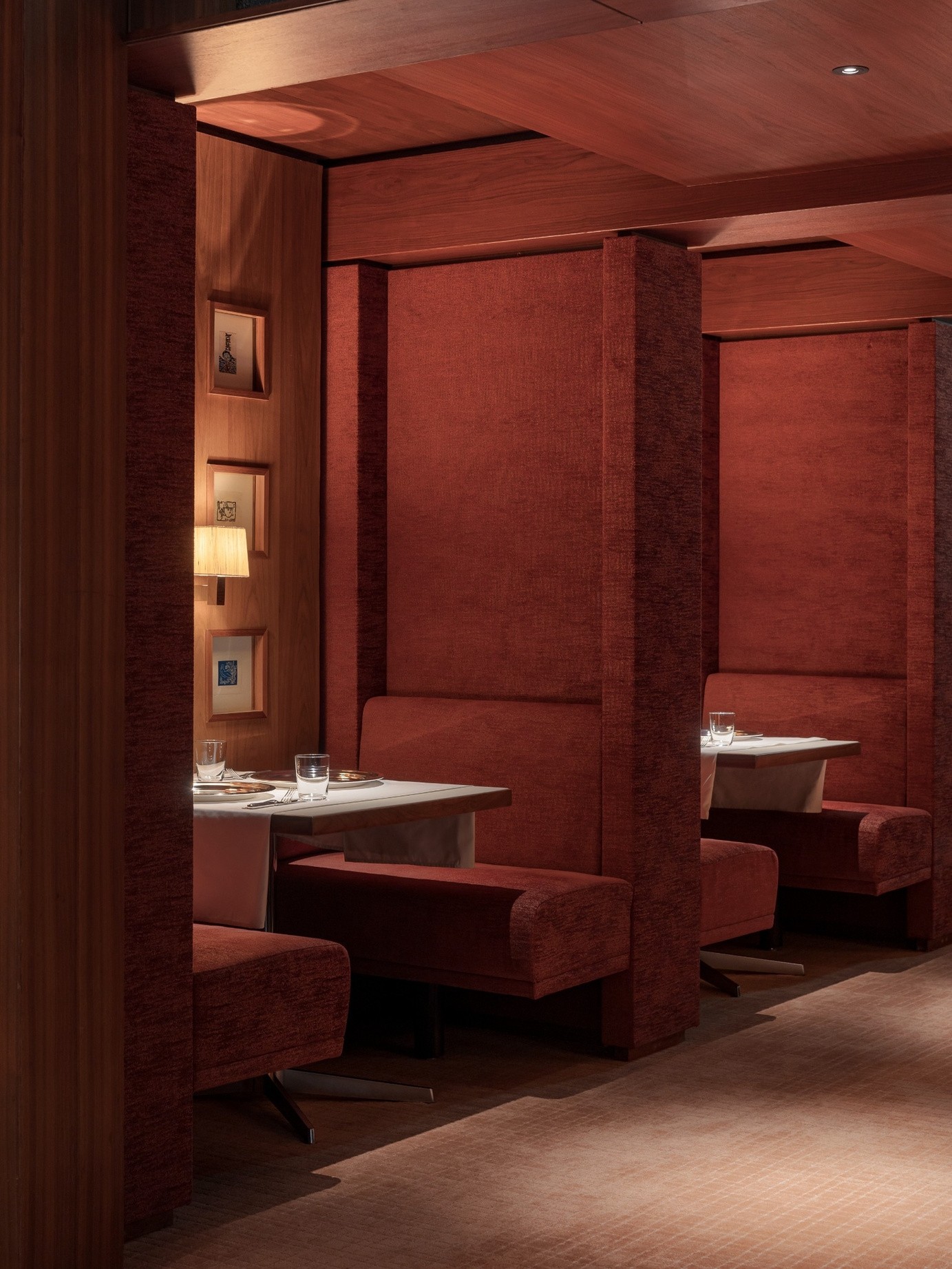
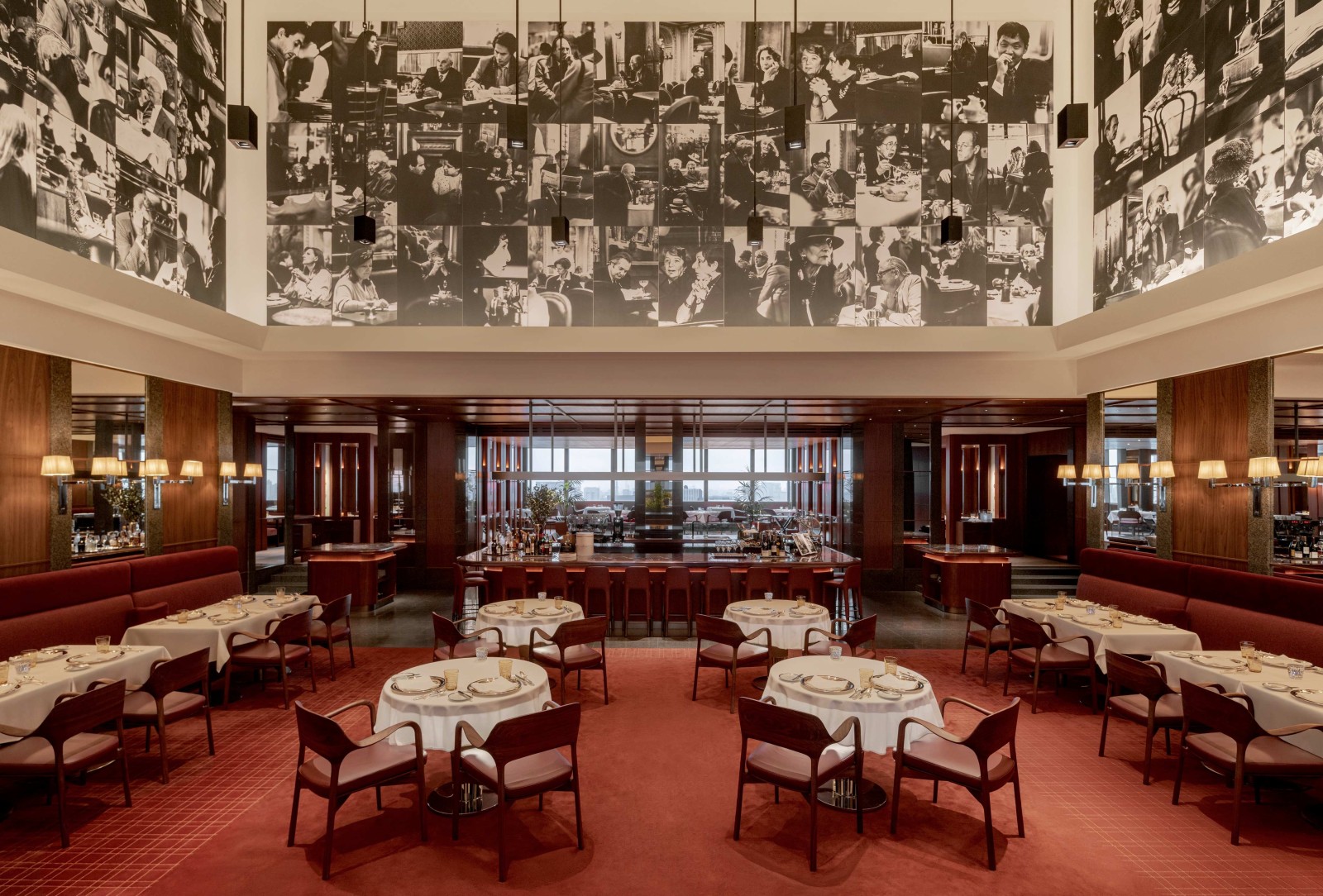
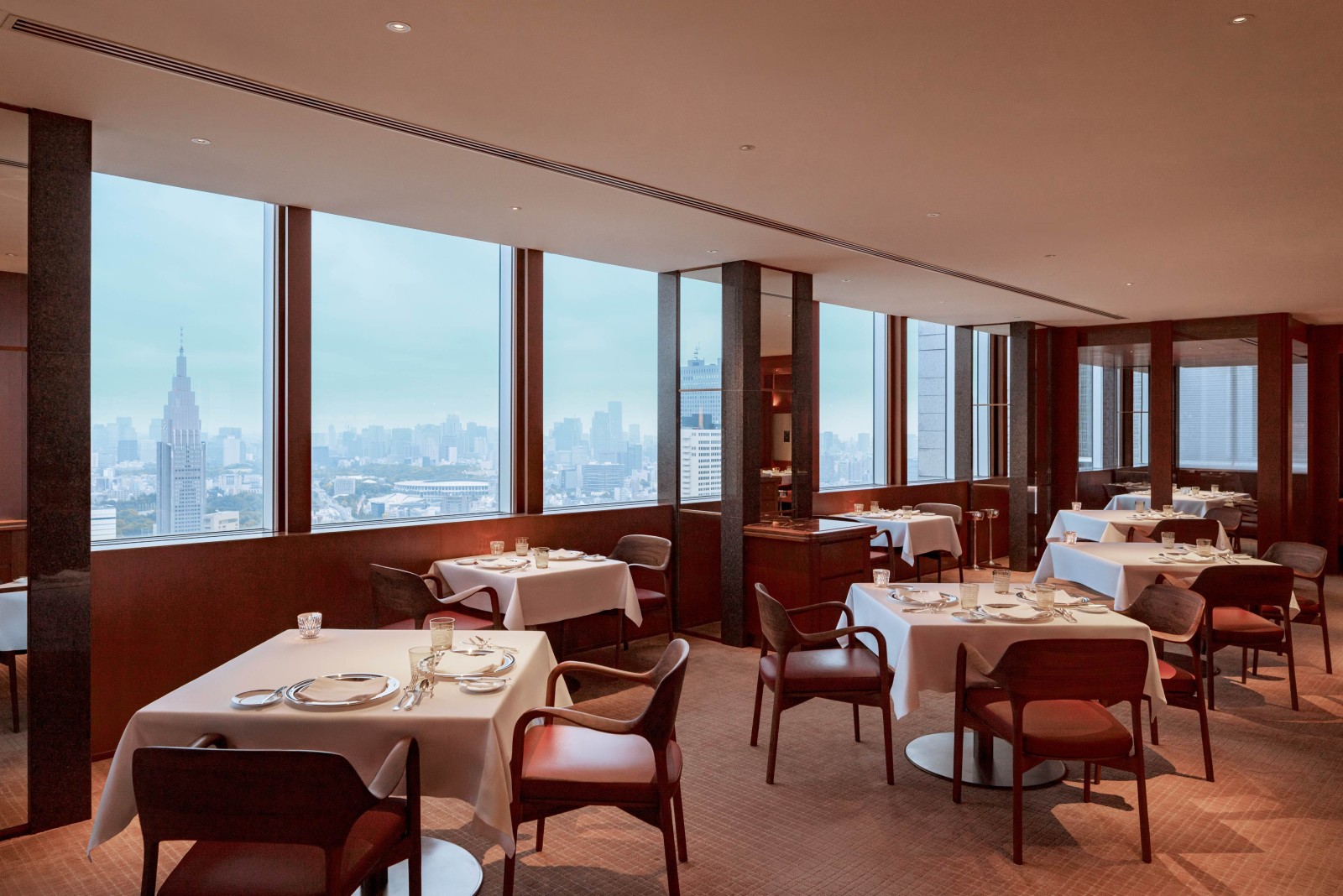
has always contained the spirit of a brasserie. The transformation chooses to
embrace this character rather than reinvent it. In collaboration with Alain
Ducasse, Jouin Manku has reinforced the codes of a Parisian brasserie while
introducing a lighter, more contemporary elegance. Deep burgundy tones, red fabric
and velvet banquettes, and crisp tablecloths create a warm and familiar
atmosphere.
The organization of the space remains clear and legible. A new central console now structures the room, shifting from breakfast display in the morning to bar in the evening. An iconic double-level collage of one hundred and forty four black and white photographs by Vera Mercer has been carefully preserved. Mercer originally captured these images in Parisian brasseries, and they have long shaped the very identity of Girandole.
The organization of the space remains clear and legible. A new central console now structures the room, shifting from breakfast display in the morning to bar in the evening. An iconic double-level collage of one hundred and forty four black and white photographs by Vera Mercer has been carefully preserved. Mercer originally captured these images in Parisian brasseries, and they have long shaped the very identity of Girandole.
THE GUESTROOMS
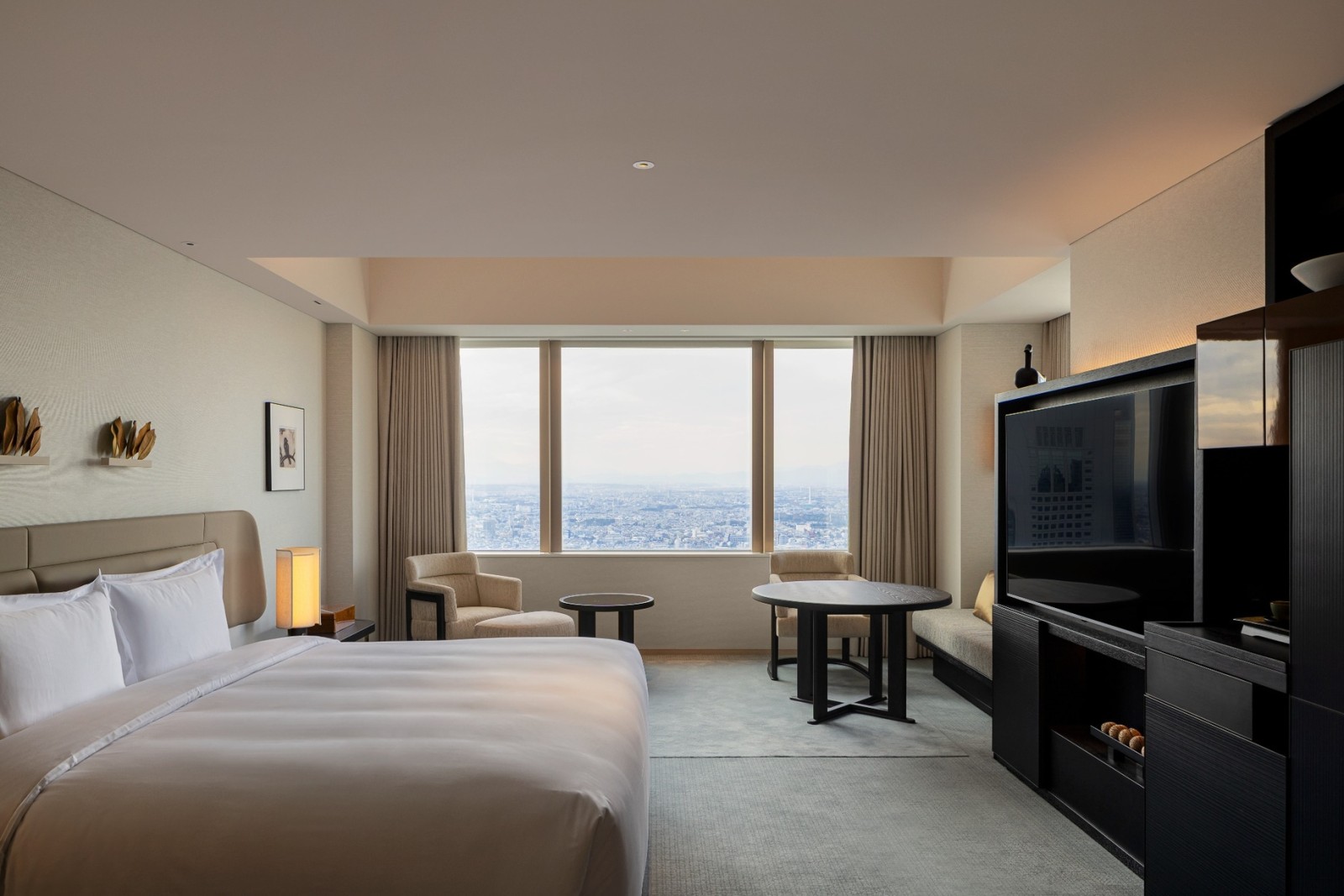
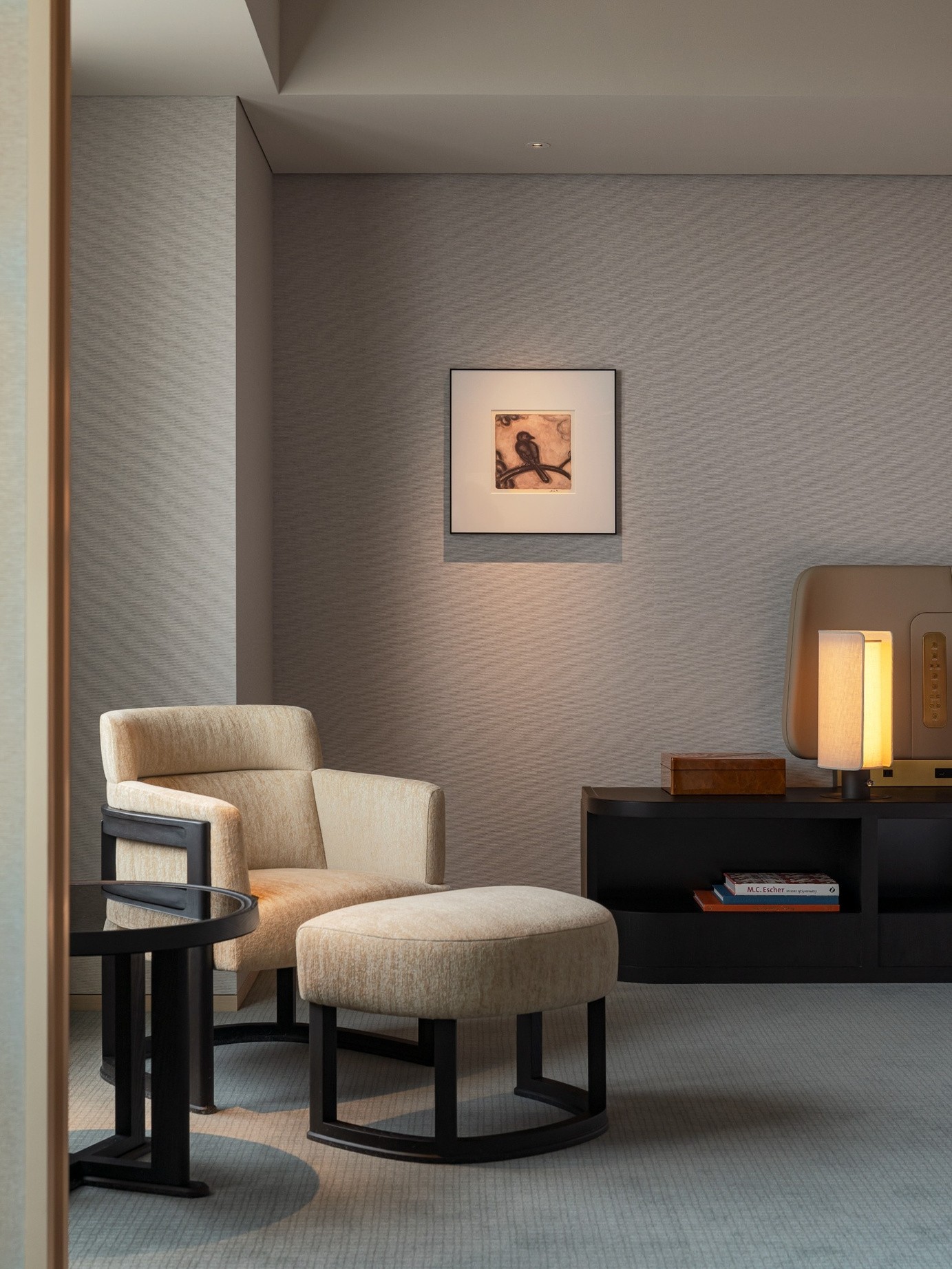
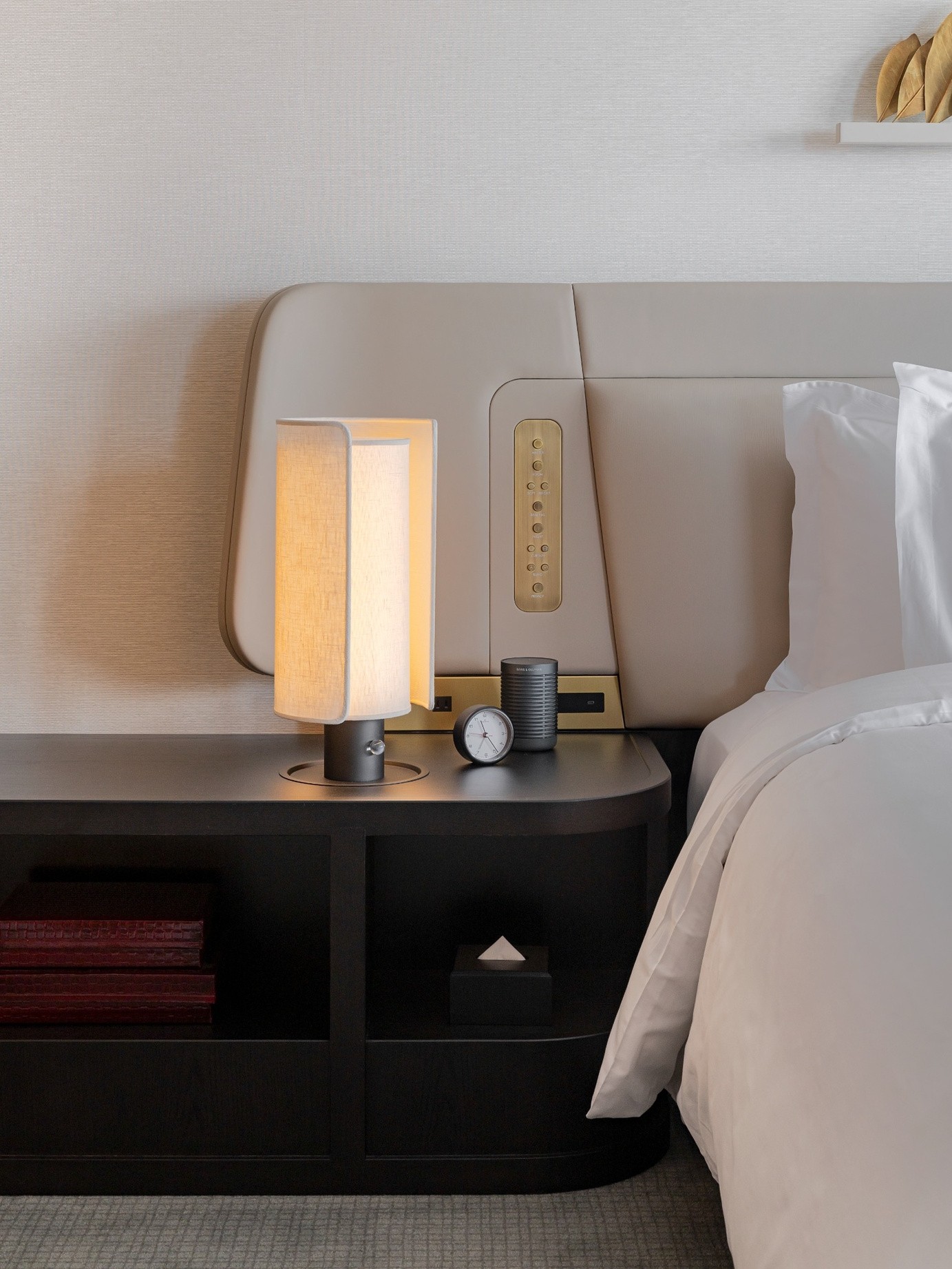
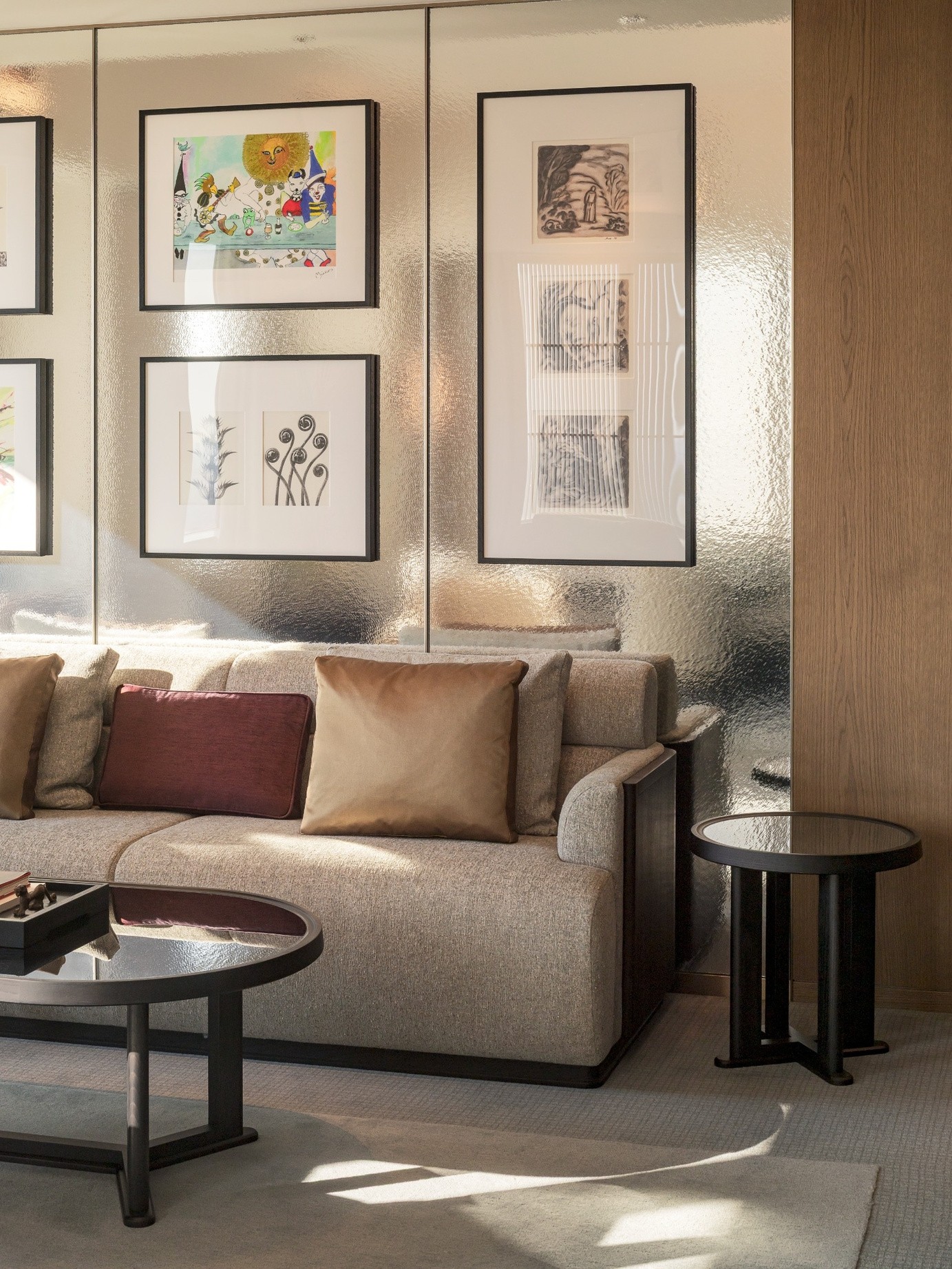
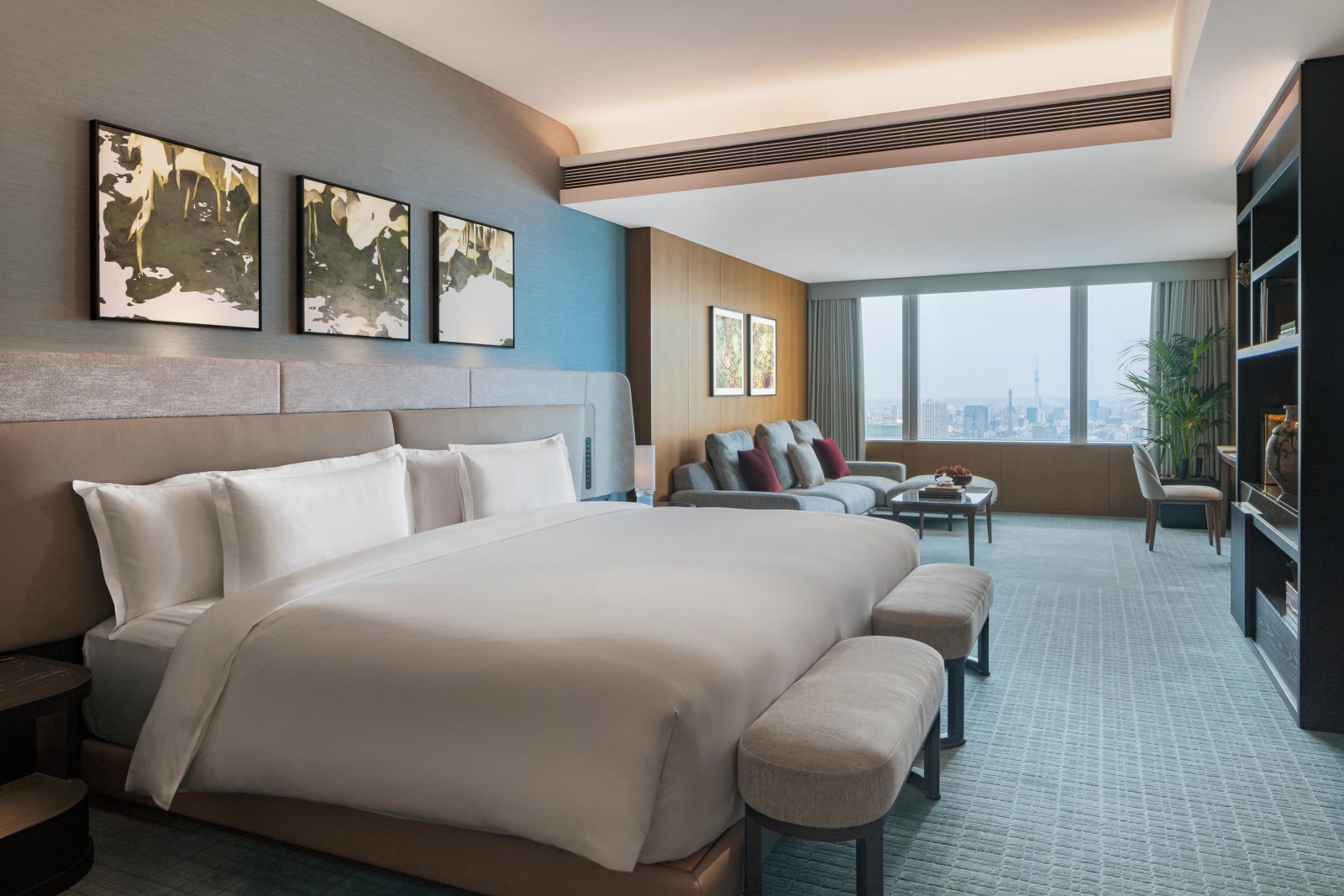
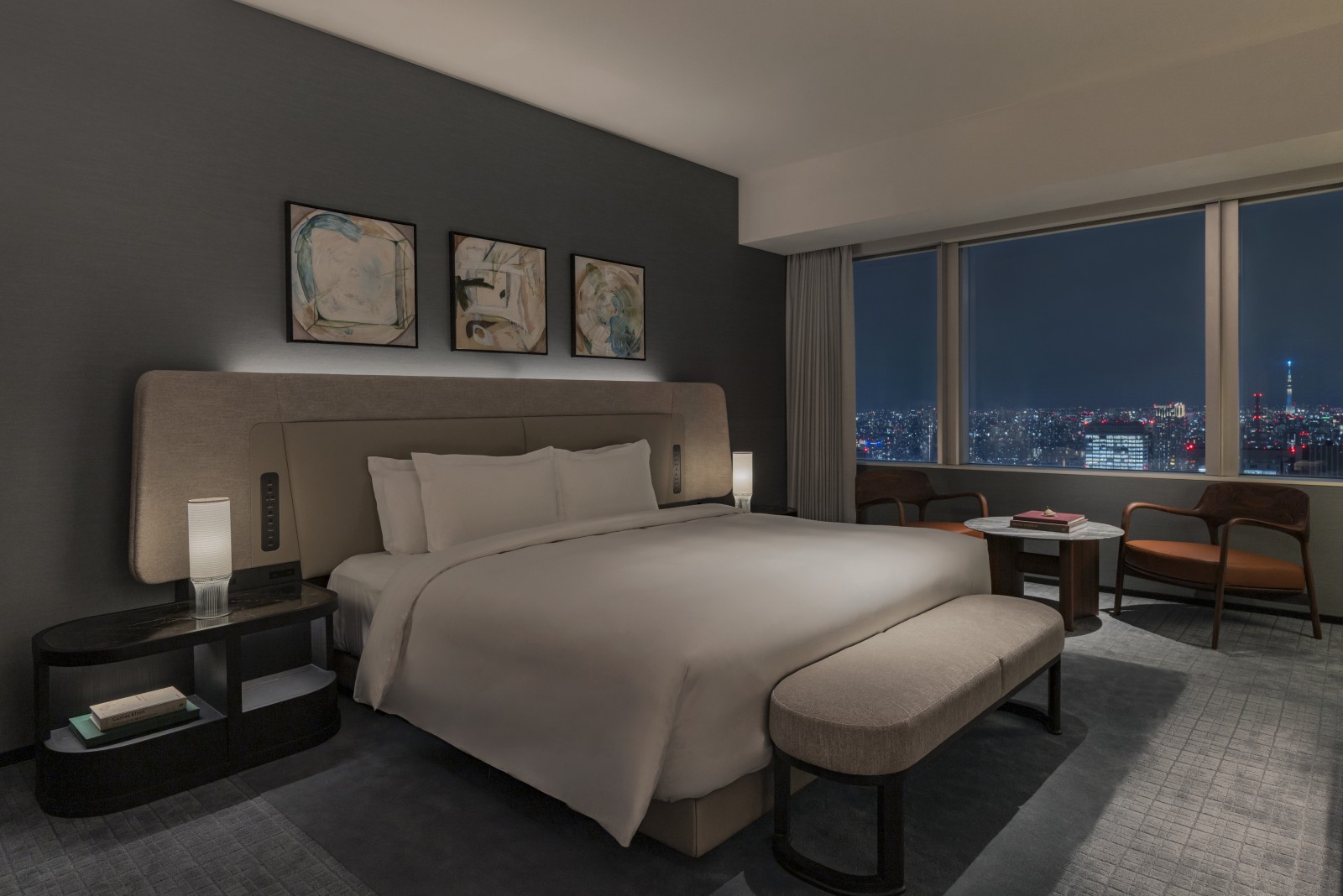
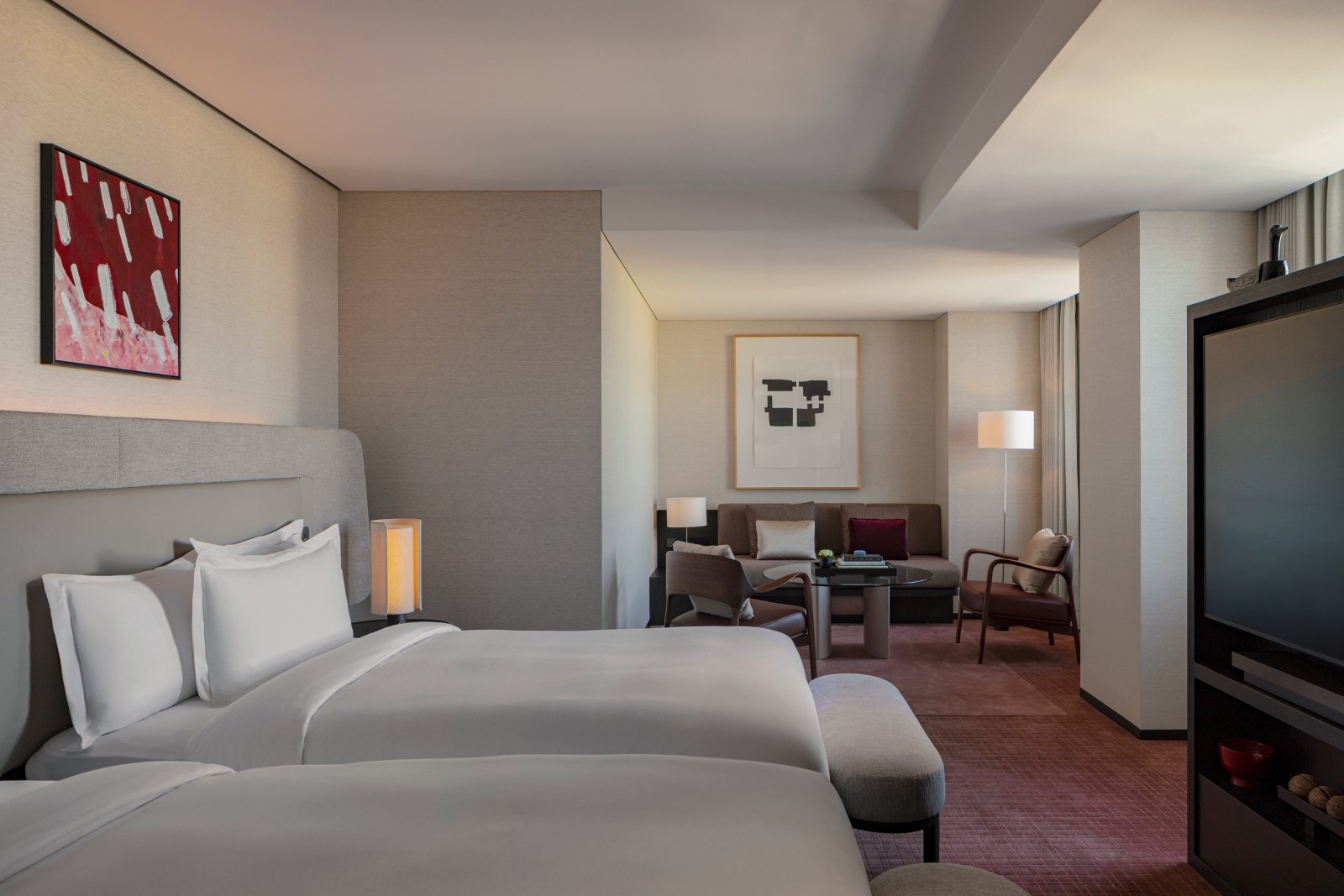
The guestroom is where our intervention is most clearly expressed, though never in contradiction with the original spirit.
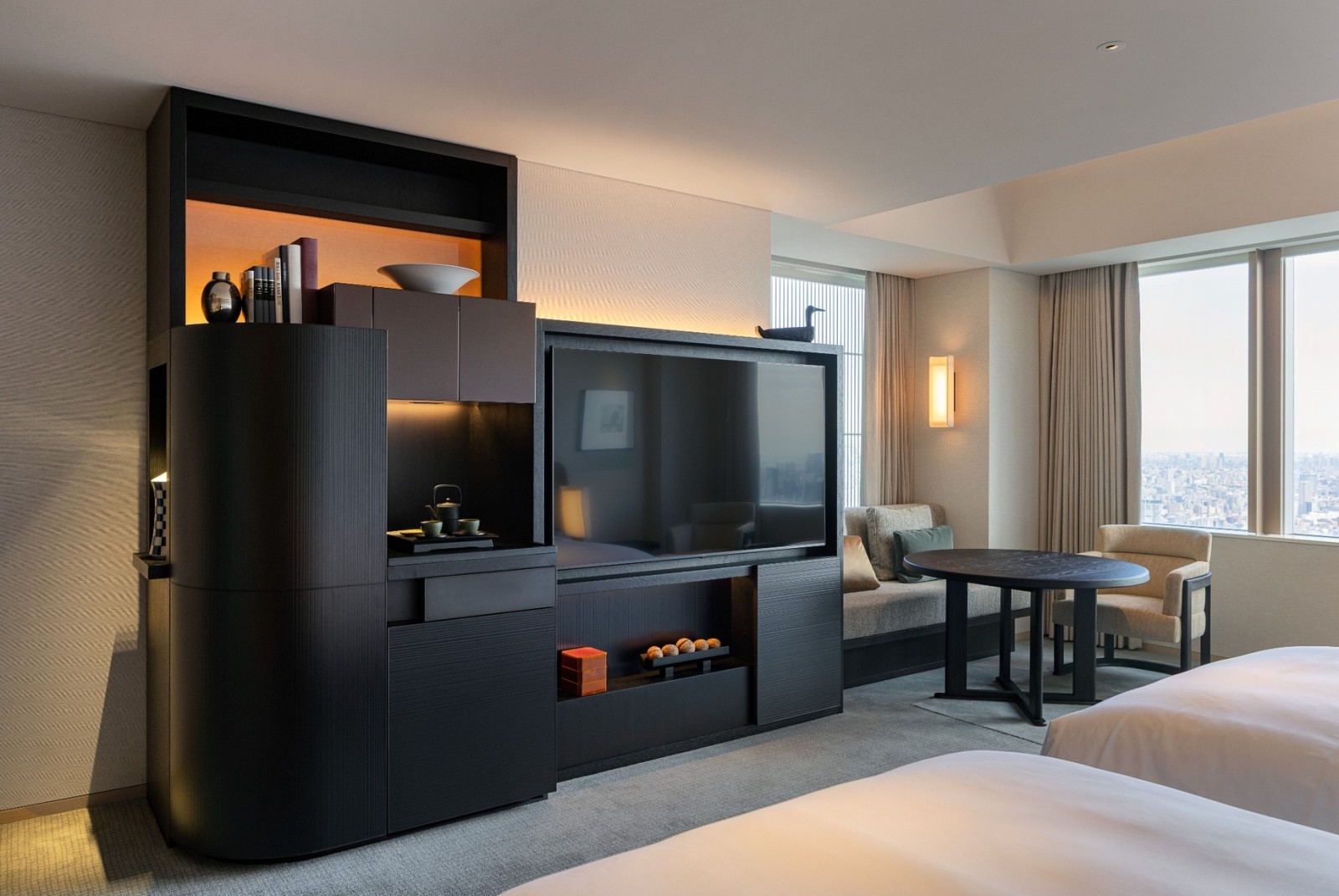
The black cabinet, once angular, becomes an inhabited sculpture, carved with fine curves and with horizontal and vertical grooves that catch the light of day.
That cabinet becomes architecture within the architecture.
It shelters the television, the minibar, the coffee machine, lacquered red niches hiding a secret lantern, invisible drawers aligned with glassware and porcelain.
It is function and material and ritual.
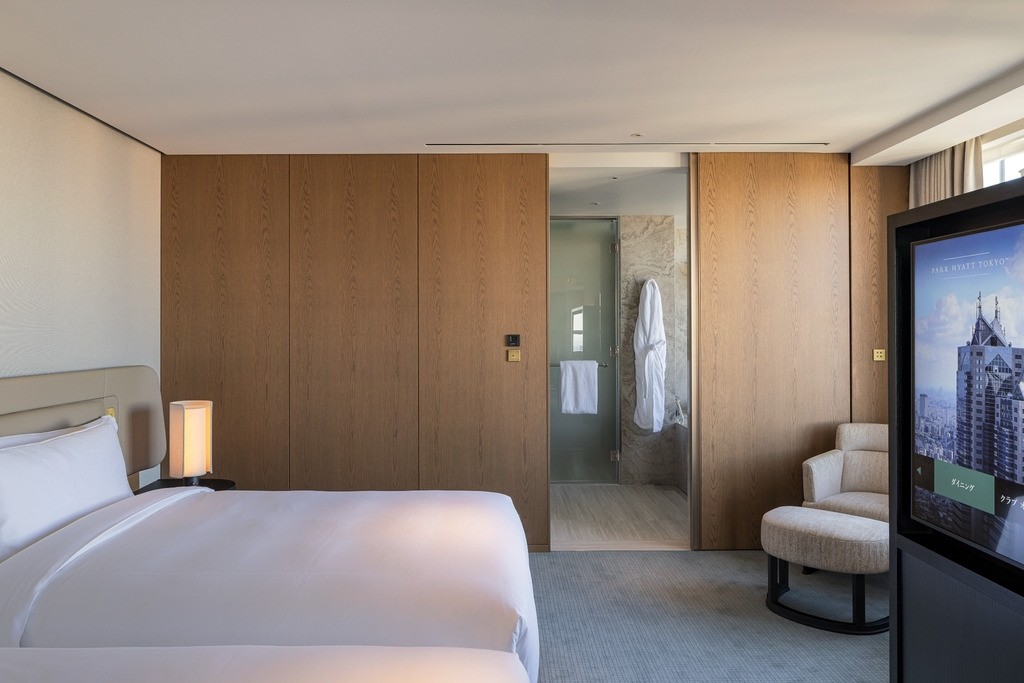
The bed rises slightly, as if rest needed to be brought closer to the light.
The headboard folds around the sides, offering the discreet protection one seeks when sleeping far from home.
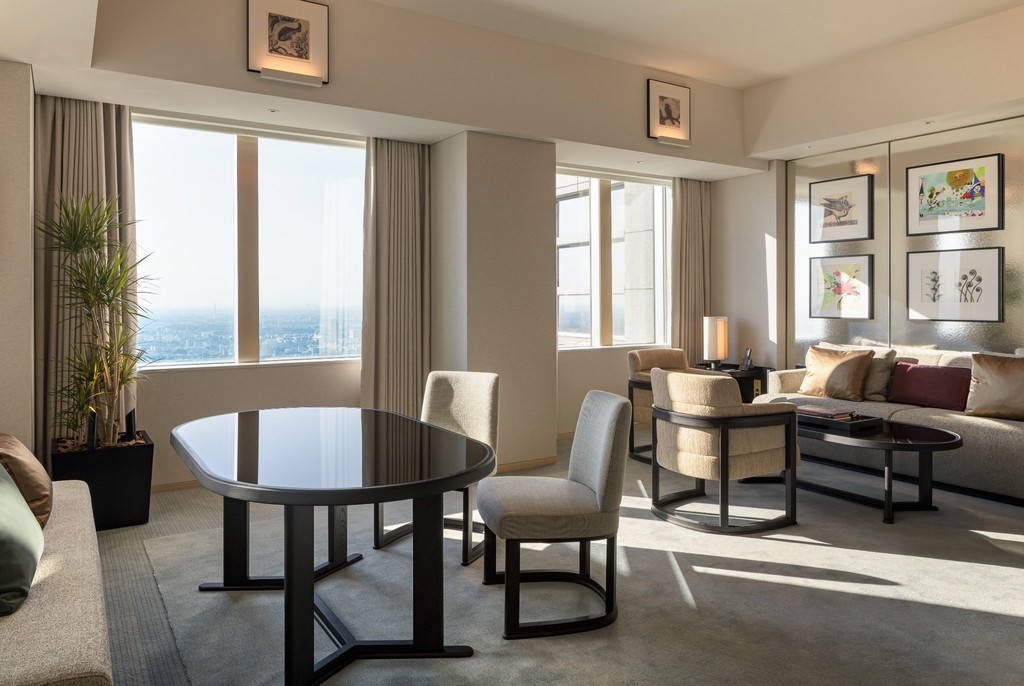
A wide round table, a sofa turned toward the window, a generous armchair create a living space attuned to contemporary rhythms.
The forms are soft, the edges rounded, the furniture resting on bases that seem to glide, as if nothing should resist the movement of the body.
The view has not changed.
Tokyo remains a mineral sea stretching toward the mountains.
And on certain blessed days, Mount Fuji appears like a silent thought.
The room no longer invites a melancholy drift.
It invites a quiet inwardness, a luminous introspection.
THE BATHROOM
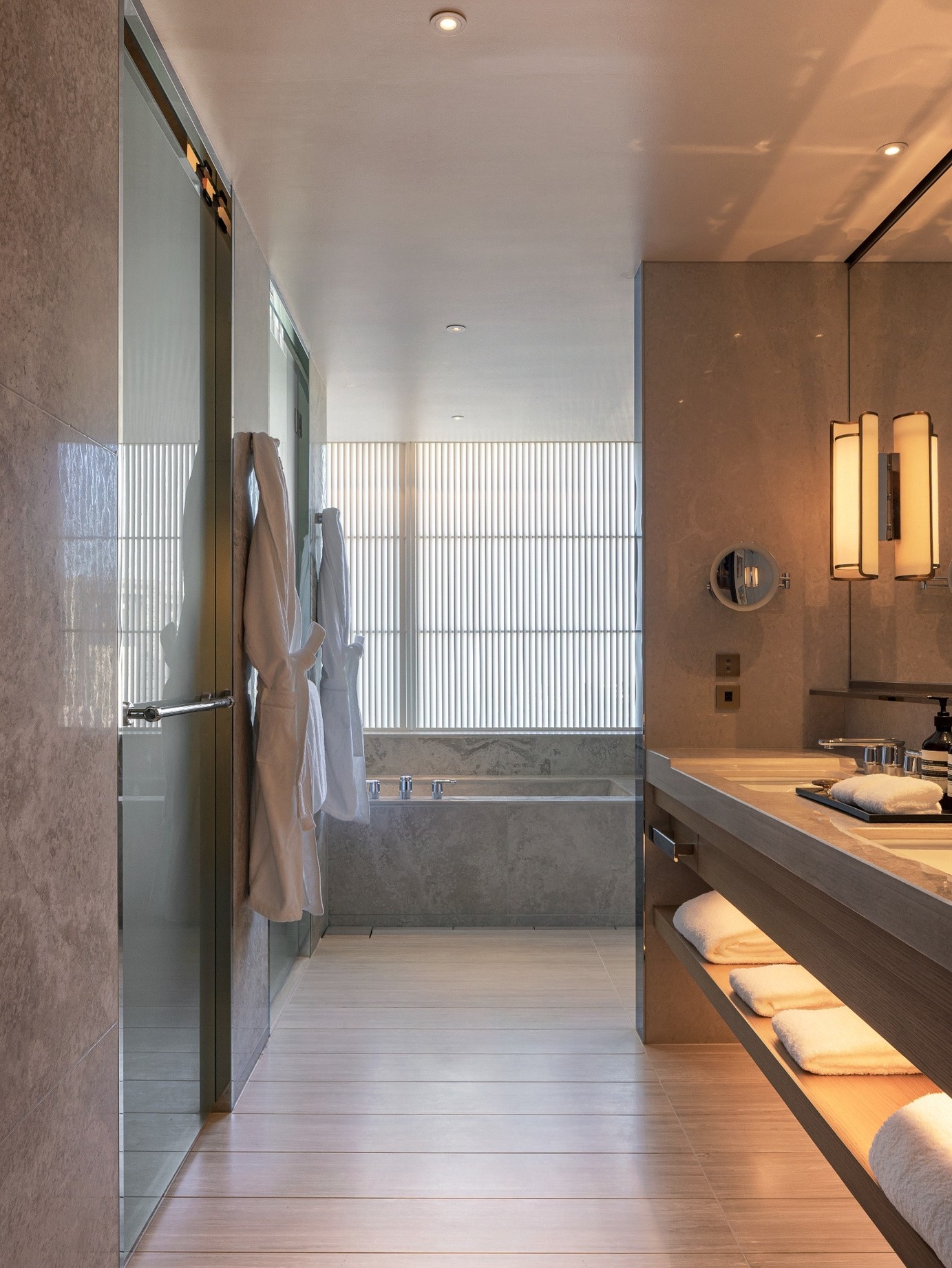
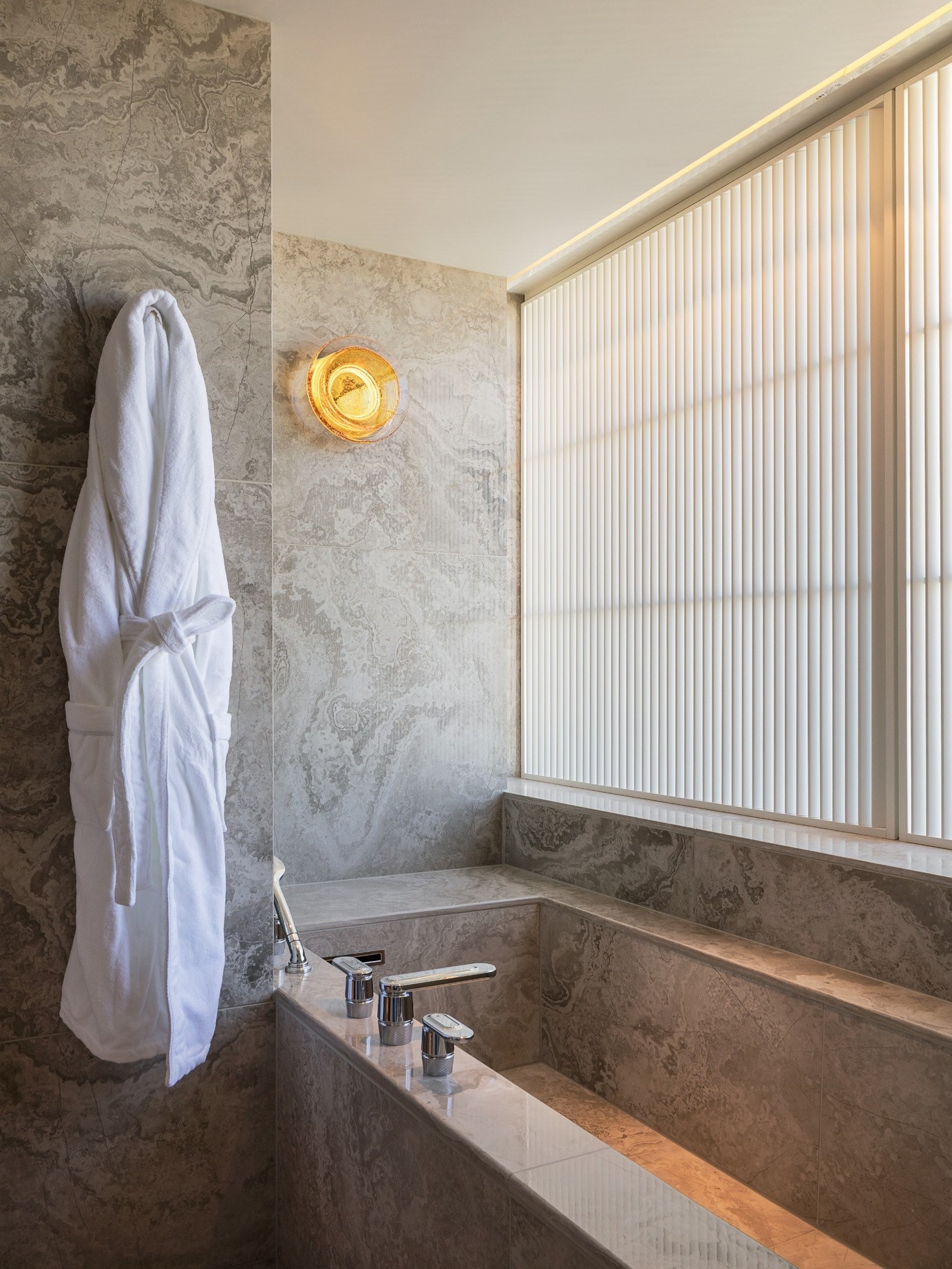
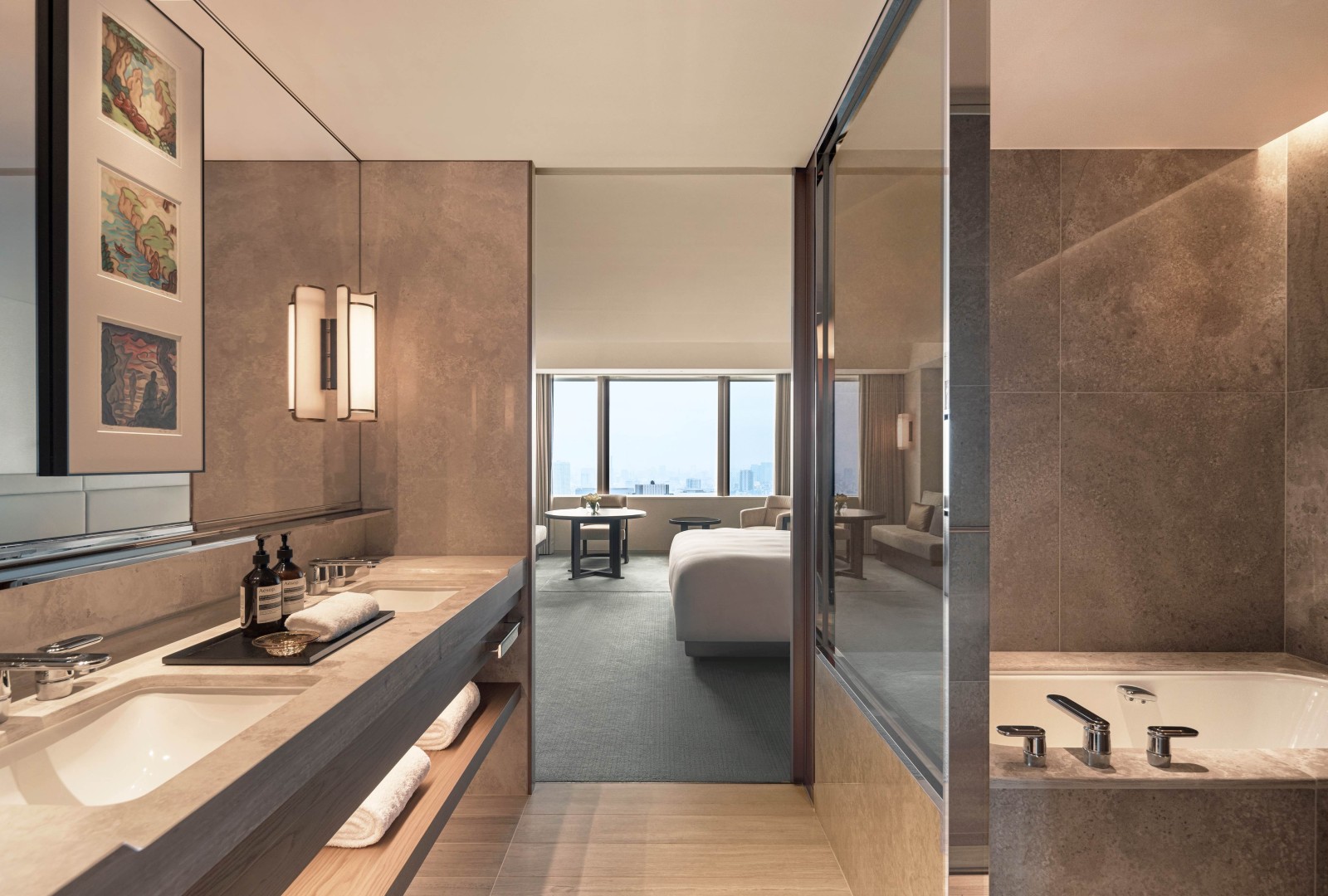
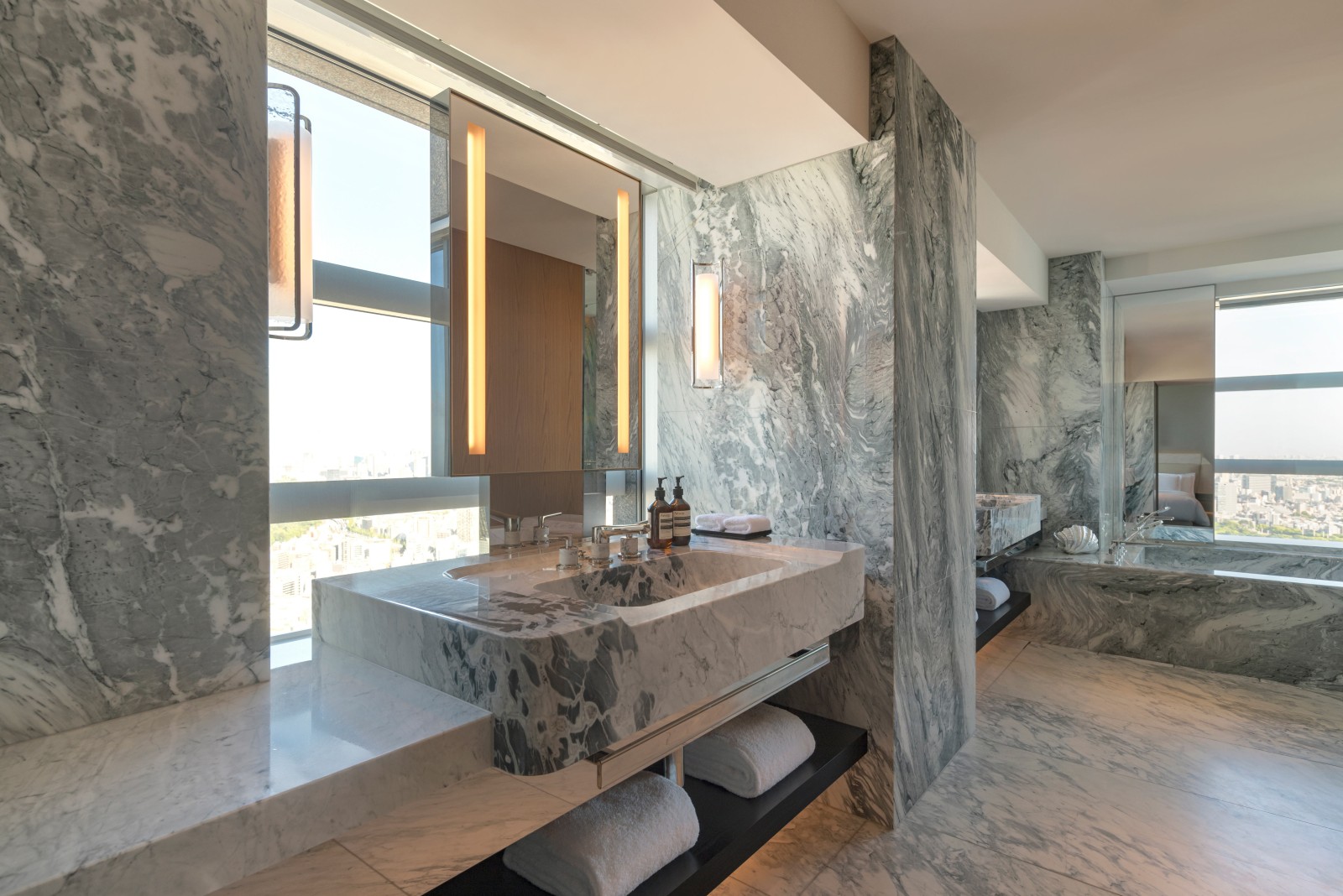
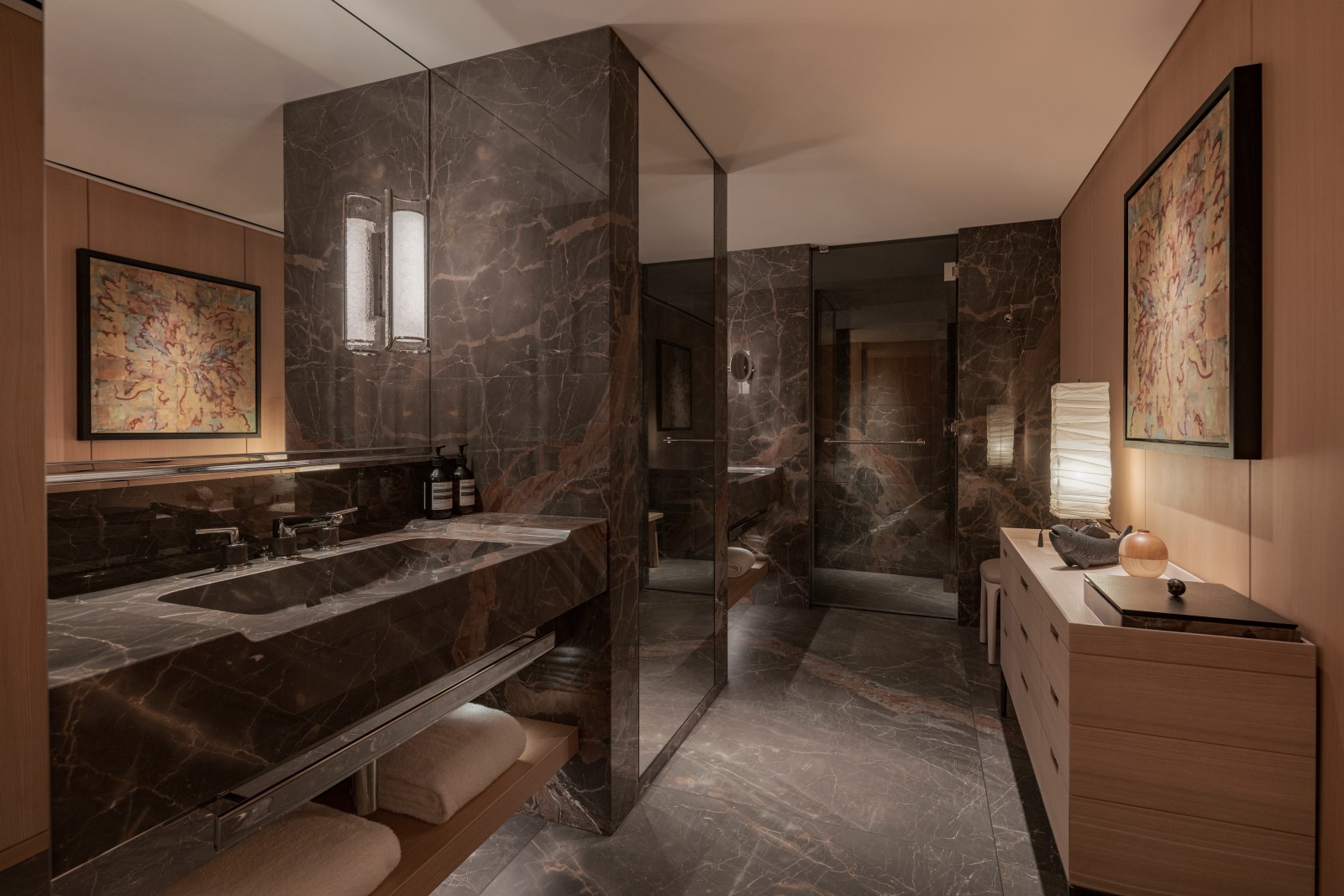
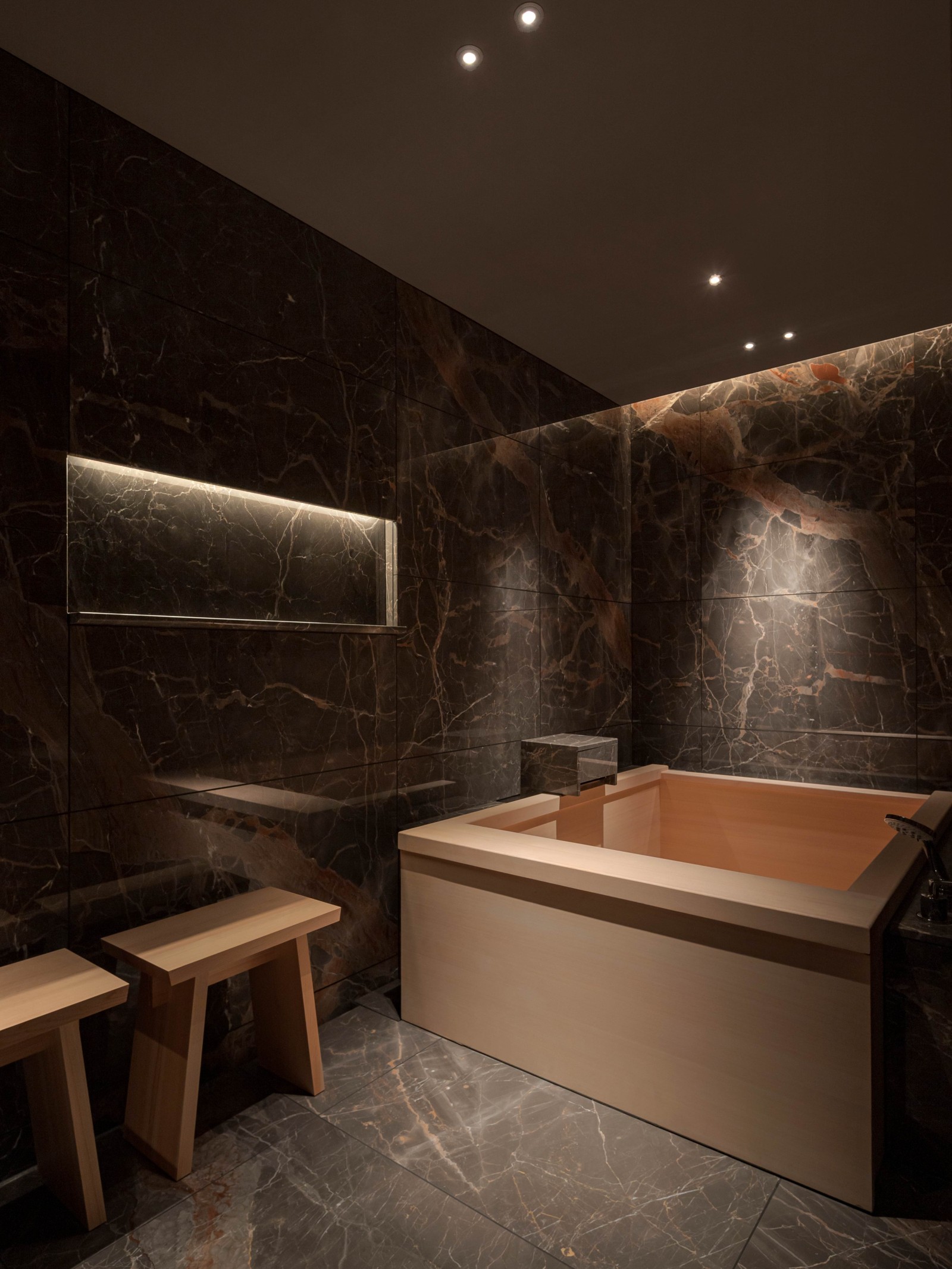
We expanded the bathroom, bringing the shower and the bathtub together in a single water space, an explicit homage to Japanese onsen.
The pale stone, soft and nearly warm to the touch, creates the sense of a mineral refuge.
The carefully calibrated light finally allows one to see oneself clearly.
A blown glass luminaire becomes a domestic moon.
To bathe is no longer a daily act.
It is a pause.
A suspension.
A way of returning to oneself.
SUITES
Presidential Suite
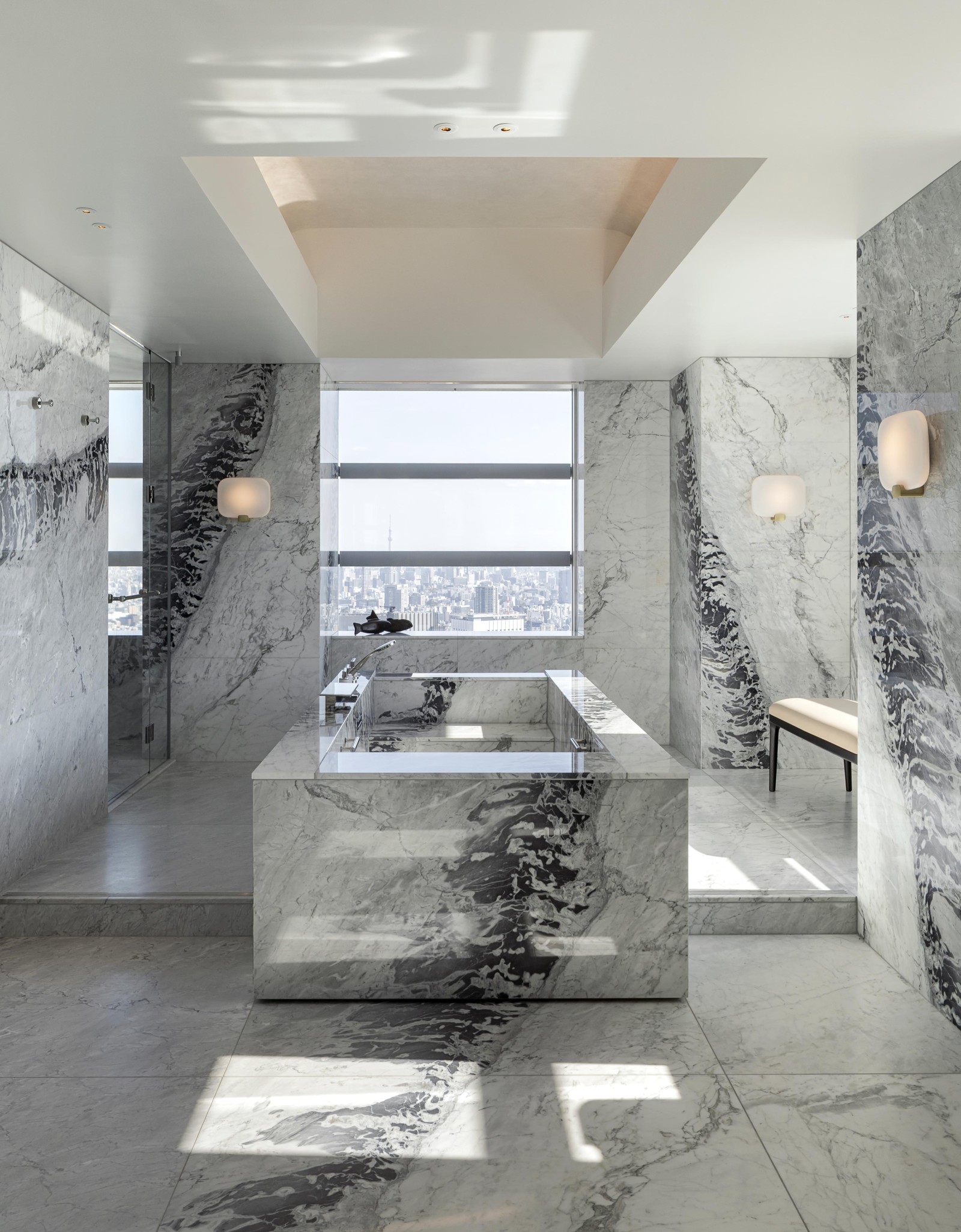
The Presidential
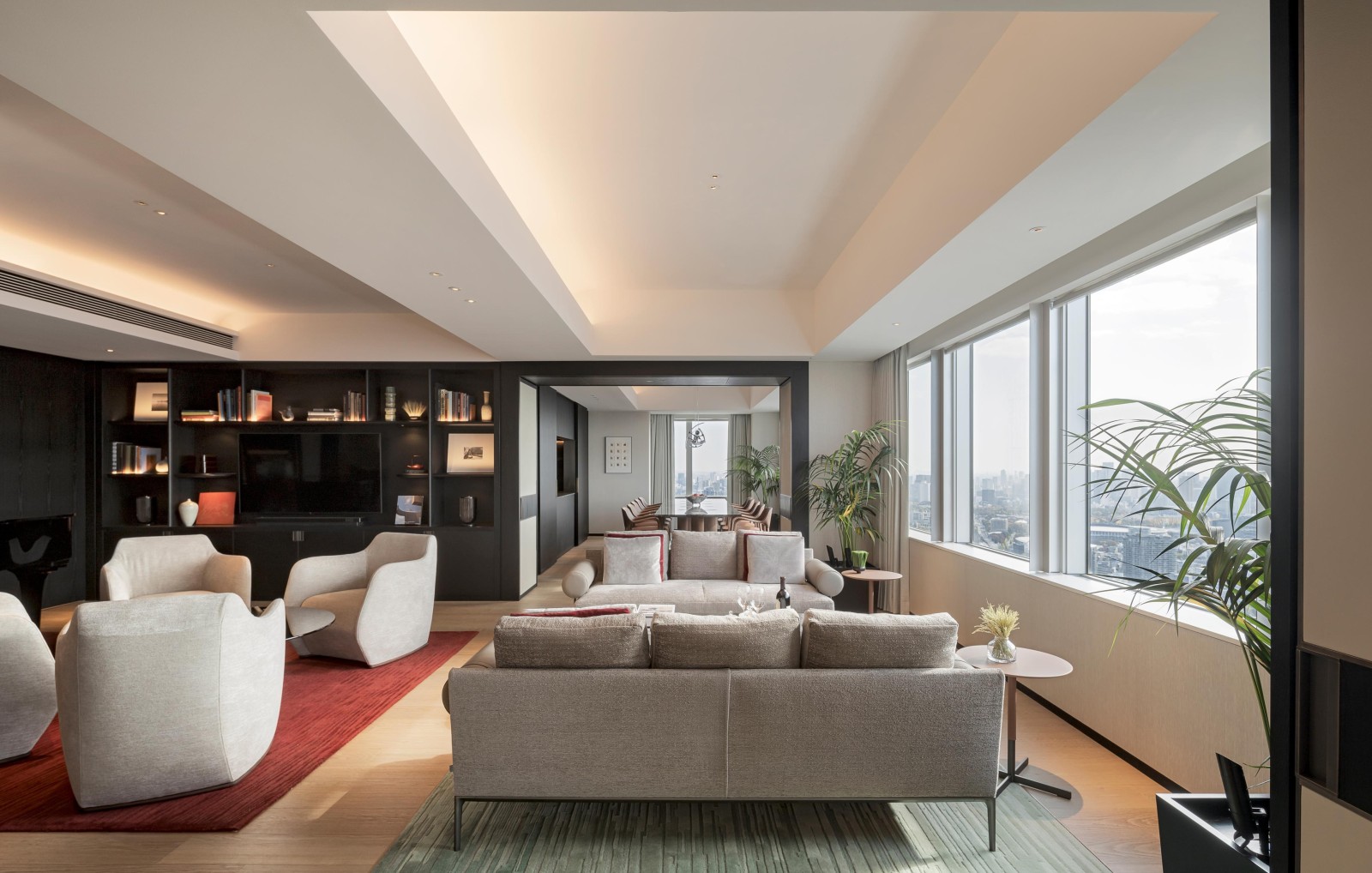
Suite has been imagined as a sanctuary in the sky. The experience begins
with a threshold marked by custom parquet, leading into a Cultural Salon
organised around a grand piano. This space forms the heart of the suite, from
which three distinct living rooms radiate. A hidden black marble bar, sliding
panels, sculptural furniture, expressive marble surfaces create a sequence of
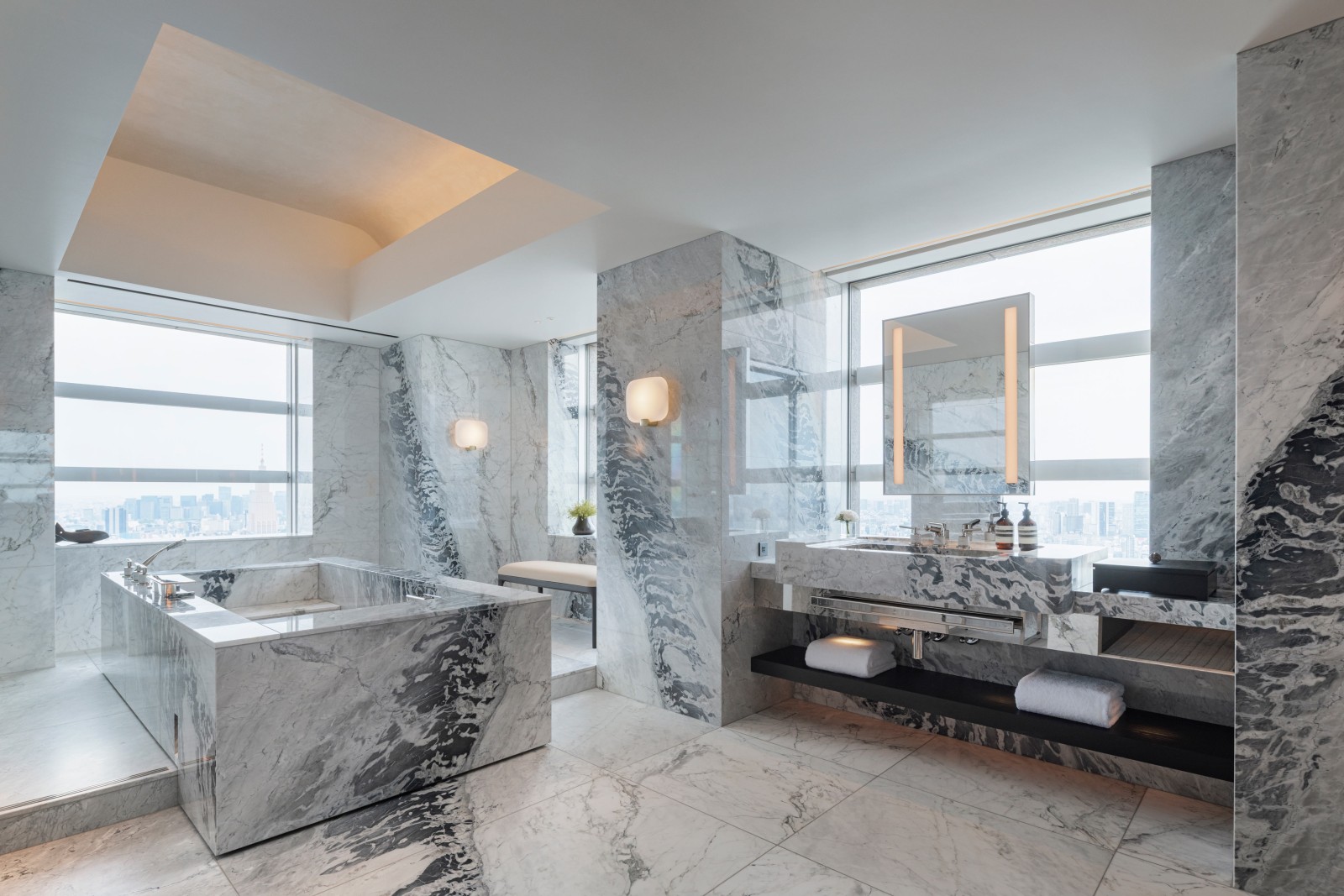
salons that are both ceremonial and deeply domestic. The bathroom becomes a
theatrical composition of stone, glass, air, and light, with a bathtub oriented
directly toward the Tokyo skyline and carefully selected slabs of Breccia
Capraia reading almost like suspended paintings.
Diplomat Suite
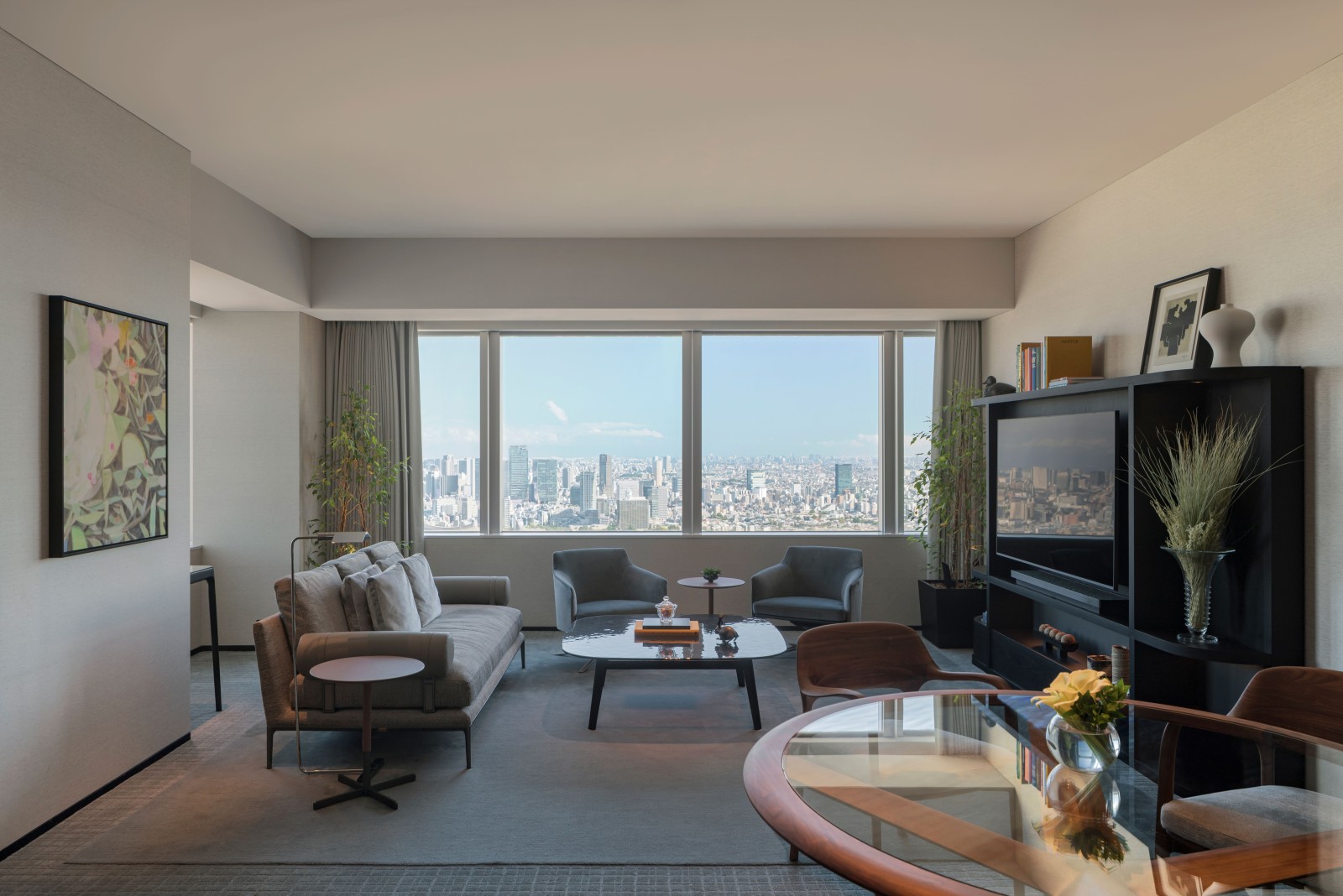
The Diplomat
Suite celebrates light and horizon. Positioned on one of the most exposed
corners of the Shinjuku Park Tower, it opens to two orientations and offers an
uninterrupted panoramic view of the city. The foyer uses deep green and dark
timber to anchor the experience, while the main salon unfolds toward the
corner, framed by symmetrical doors and a new feature wall that hosts a curated
artwork and concealed piano. In the bathroom, the long and narrow layout has
been retained but animated with Breccia Capraia marble that echoes the movement
of clouds and sky outside, reinforcing the connection between interior and
landscape.
Governor Suite
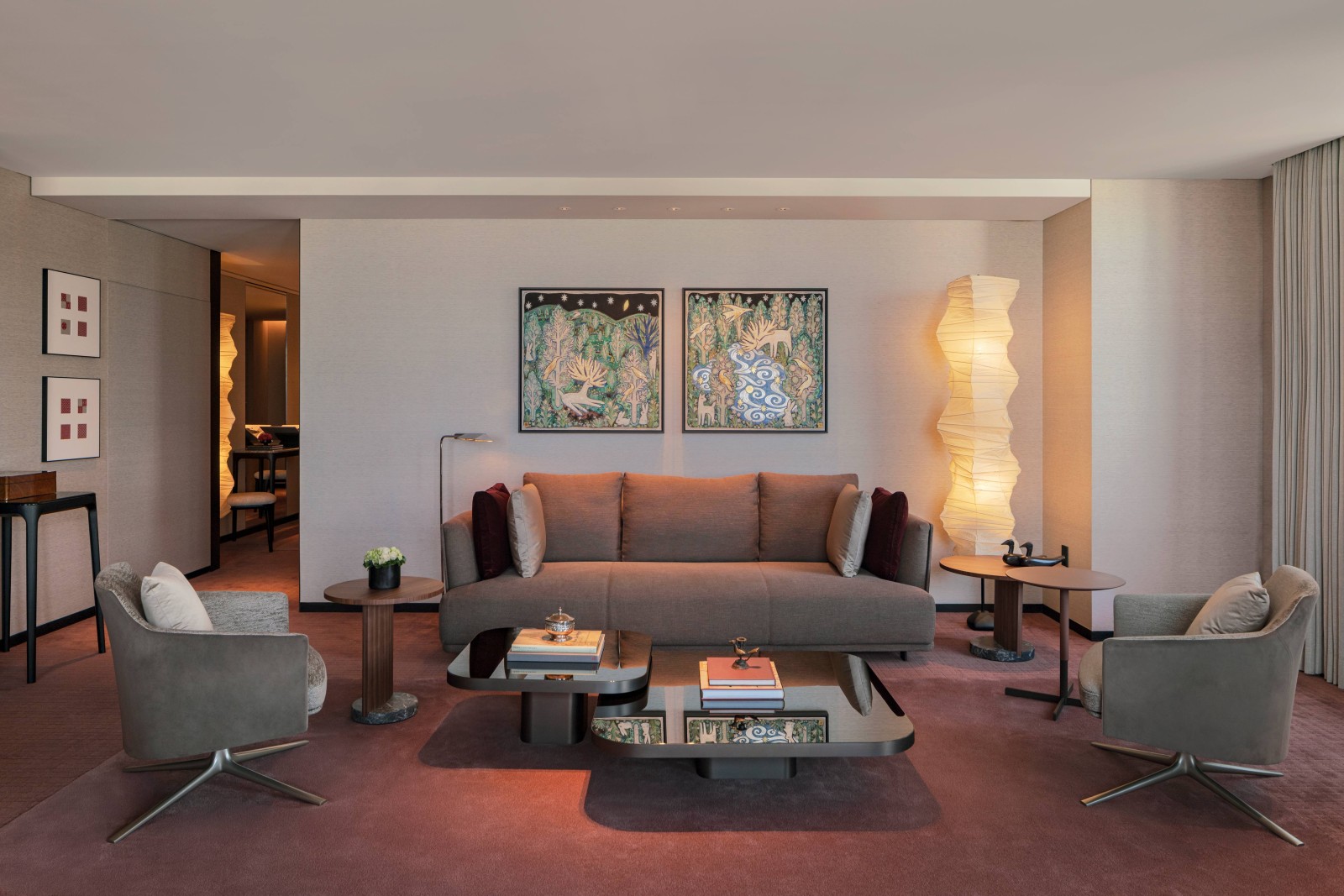
The Governor Suite transforms its narrow proportions into an introspective retreat
shaped by warm Bordeaux tones, pale timber and a sense of cultivated simplicity
that recalls a refined private apartment. In the bathroom, the absence of
natural light deepens the experience into a meditative ritual where hinoki,
Japanese cedar and the Ombra di Caravaggio marble resonate with the spirit of
In Praise of Shadows.
Read more
IN FIGURES
Spaces:
Peak Lounge: 663 sq. m.
Girandole by Alain Ducasse: 414 sq. m.
21 Park Room: 45 sq. m.
102 Park Deluxe Room: 55 sq. m.
19 Park View Room: 60 sq. m.
15 Junior Suite: 90 sq. m.
9 Park Suite: 100 sq. m.
1 Governor Suite: 140 sq. m.
1 Diplomatic Suite: 160 sq. m.
1 Presidential Suite: 290 sq. m.
Number of Rooms: 166
Number of Suites: 3
Total floor area: 11,772 sq. m.
Peak Lounge: 663 sq. m.
Girandole by Alain Ducasse: 414 sq. m.
21 Park Room: 45 sq. m.
102 Park Deluxe Room: 55 sq. m.
19 Park View Room: 60 sq. m.
15 Junior Suite: 90 sq. m.
9 Park Suite: 100 sq. m.
1 Governor Suite: 140 sq. m.
1 Diplomatic Suite: 160 sq. m.
1 Presidential Suite: 290 sq. m.
Number of Rooms: 166
Number of Suites: 3
Total floor area: 11,772 sq. m.
Informations
| Client/ Developer | Tokyo Gas Real Estate |
| Hotel Group | Hyatt Hotels and Resorts |
| Architectural design and design | Jouin Manku Patrick Jouin Sanjit Manku Jacques Goubin Bénédicte Bonnefoi Mio Shibuya Julien Lize Anna Vnukova Astrid Berlisg Néhémy goguely Aurélien Gauducheau Damien Bohu Juliane Caron Barbara Roussel Bruno Pimpanini Lydia Bouzidi Günay Mahmudova Axel de Clermont-Tonnerre Constance Frapolli |
| Architect of record | Kajima Design |
| Associated Interior Designer | Ilya Corporation |
| Lighting designer | Workthect |
| Craftmen | Takashimaya Space Creats (TSC, milwork) Starset Milano / Porada 2mconcept Tai Ping Lelievre THG |
| Furniture Patrick Jouin iD prescription | Porada : Oswood, Ella, Louis, Trunk, Alan Starset Milano : Manda, Jolly, Vendome Fiam : Magma Pedrali : Ester DCW : Light me tender IP |
| Year | 2025 |
Credits
Park Hyatt Tokyo, Jouin Manku (c) Park YongJoon Choi
Related

✕